Logotipo
Ver todos los alojamientos
Logotipo
Discover Tarragona Differently

The Tarragona They Don’t Tell You About

10 Stories. 10 Secrets. Can You Find Them?

More than two thousand years of Tarragona are hidden in its streets, walls and buildings — often in places you could walk past without noticing anything unusual.

This is not a traditional sightseeing route. Follow the clues, look carefully and discover a Tarragona that most visitors never see.

How to Play 🔎

Start with Secret #1 and follow the clues. Each challenge will lead you to a real place, object or hidden detail in Tarragona’s old town.

When you think you have found it, open “Reveal the secret” and discover the story behind what you are looking at.

The route begins beside the Cathedral and moves through the Part Alta towards the old Jewish quarter and Sant Antoni, then continues through Plaça del Rei, the Roman Circus, Plaça del Fòrum and Carrer dels Cavallers, finishing at Portal del Roser.

At a normal walking pace the route itself takes around 35–45 minutes, but allow approximately 1½–2 hours to enjoy the clues, discoveries and stories.

Route at a glance

10 secrets through the Part Alta

Follow them in order and the walk will take you naturally through the old town without unnecessary backtracking.

01 Escrivanies Velles
02 Cathedral Cloister
03 Carrer Merceria
04 Plaça del Fòrum
05 Sant Antoni
06 Jewish Quarter
07 Plaça del Rei
08 Roman Circus
09 Carrer dels Cavallers
10 Portal del Roser
1 Roman & Medieval Tarragona

The Wall That Keeps Two Civilisations

Your journey begins only a few steps from Tarragona Cathedral.

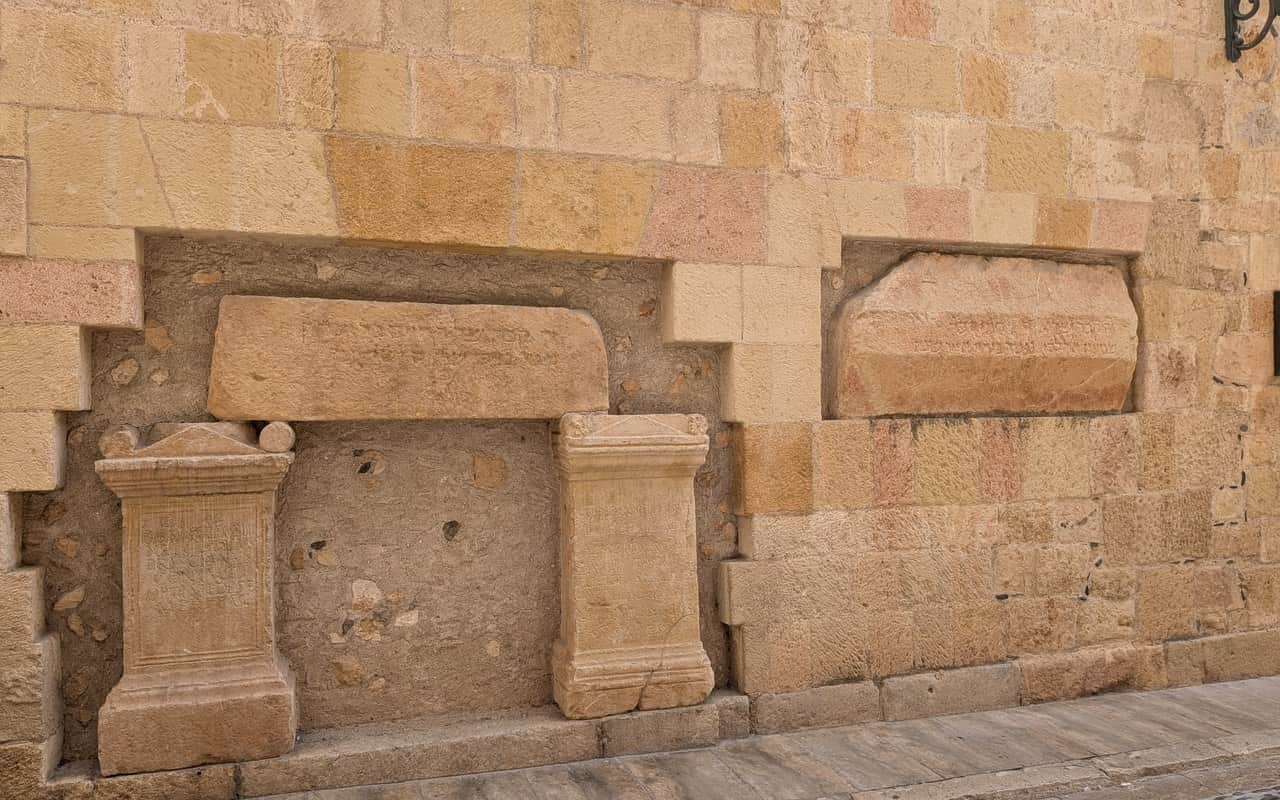
In one narrow street, a single façade quietly holds pieces of two very different Tarragonas.

One belonged to the Roman city.

The other belonged to people who lived here more than a thousand years later.

Four stones. Two civilisations.

🔎 Your Mission

Find Carrer de les Escrivanies Velles.

Look for an old house at number 6.

Don’t look up.

Look carefully at the stones set into the lower part of the façade.

Four of them do not really belong to the house. Can you work out which two come from Roman Tarragona and which two belong to medieval Jewish Tarragona?

💡 I need another clue

Two stones carry writing that probably looks unfamiliar.

Look for Hebrew letters and compare them with the other ancient stone pieces nearby.

👀 I think I’ve found them — reveal the secret

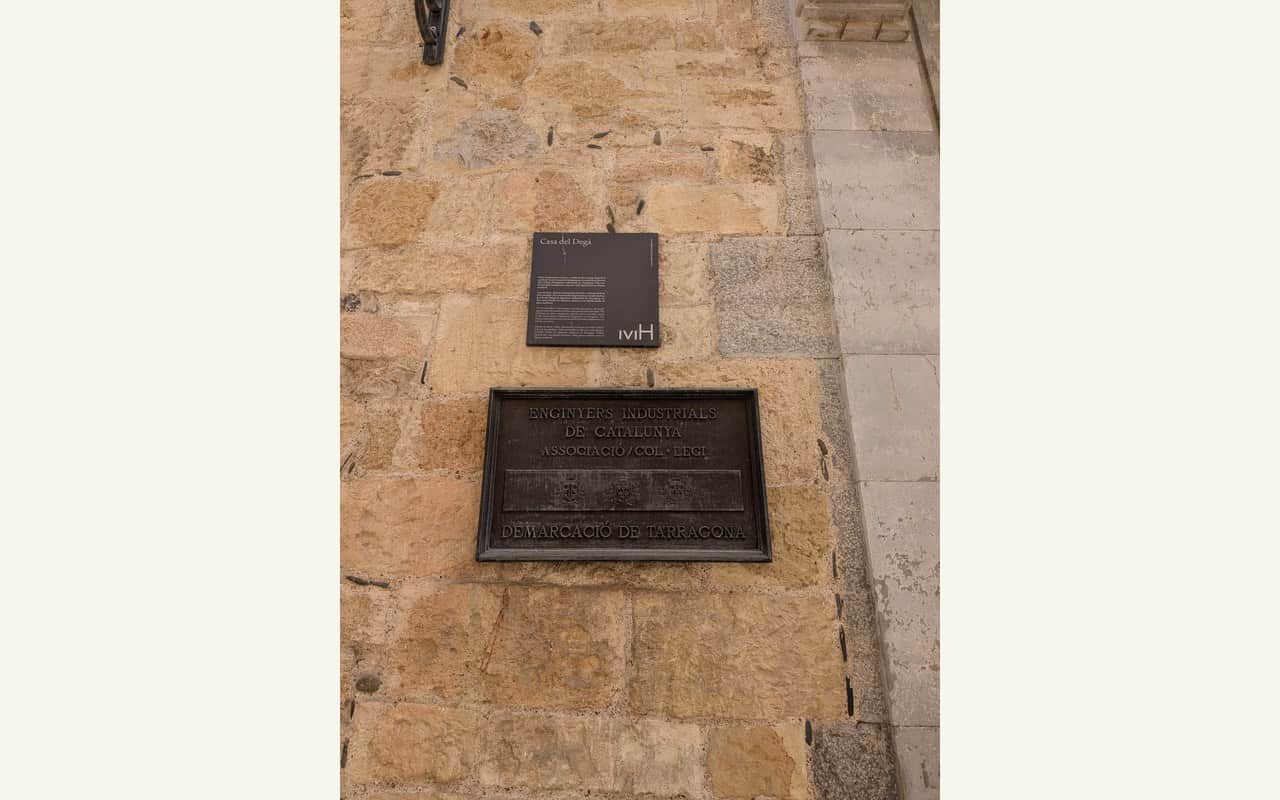
You are looking at the Casa del Degà.

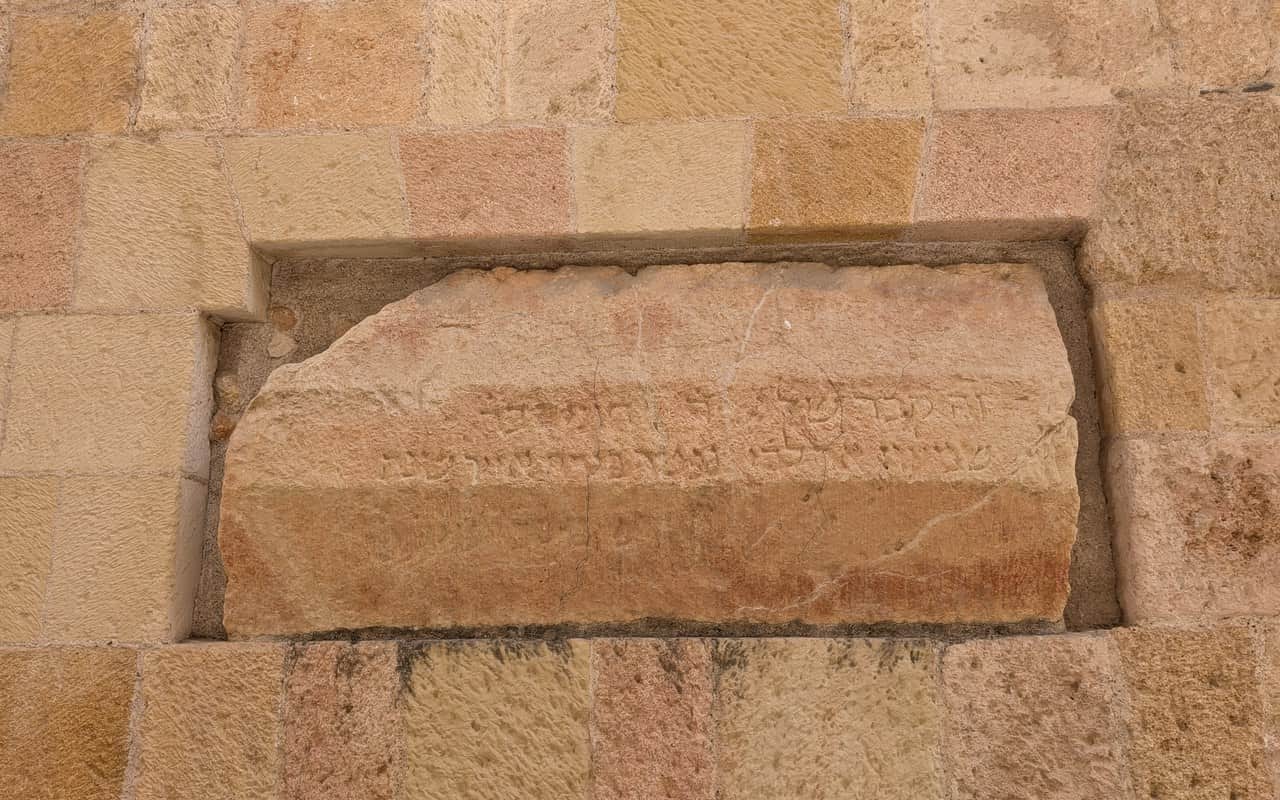
Set into its façade are four ancient stone pieces: two Roman cippi and two reproductions of medieval Jewish funerary inscriptions dated to 1300 and 1302.

The original Hebrew gravestones came from Tarragona’s medieval Jewish cemetery, which was located outside the old city near the coast.

The stones you see here are replicas, but the inscriptions preserve the memory of real people who lived in medieval Tarragona.

In a few centimetres of wall, more than a thousand years of Tarragona meet.
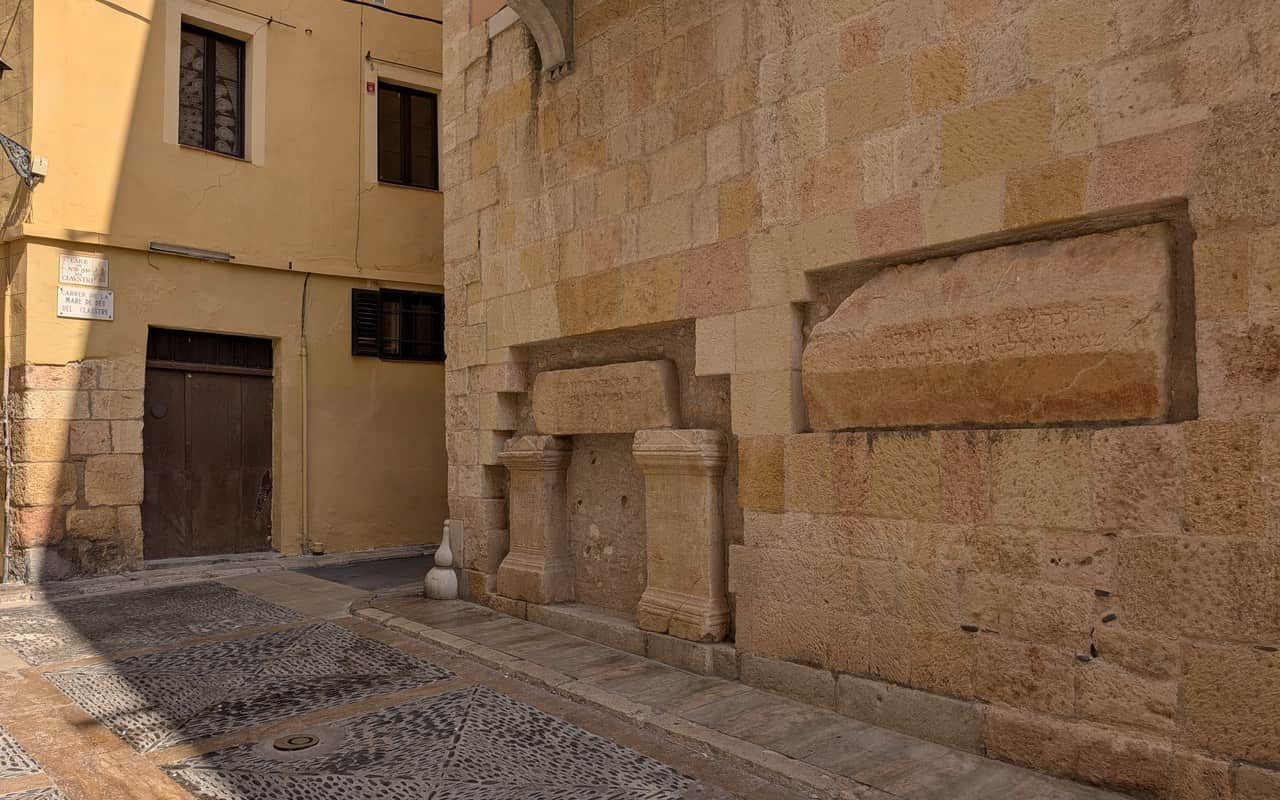
Casa del Degà façade in Carrer de les Escrivanies Velles, Tarragona Roman and medieval Jewish stone pieces set into the façade of Casa del Degà in Tarragona Medieval Hebrew funerary inscription set into the façade of Casa del Degà in Tarragona Historic plaque on the Casa del Degà in Carrer de les Escrivanies Velles, Tarragona

🏛️ Documented History

Now head towards the Cathedral. Your next secret is waiting in stone.
2 Medieval Tarragona

An Army with Four Legs

Now travel forward into medieval Tarragona.

Somewhere around Tarragona Cathedral survives a strange story carved into stone.

It begins with a banquet and an unexpected army.

They carried no swords.

They wore no armour.

They had four legs.

🔎 Your Mission

Enter the Cathedral cloister and look carefully at the medieval stone carvings.

Somewhere in its stonework, a tiny procession tells the story.

Find the animals before reading the answer.

💡 I need another clue

They are much smaller than you are expecting.

Look for rats — and the animal hunting them.

👀 I’ve found them — reveal the story

The Procession of the Rats

One of Tarragona Cathedral’s most curious medieval carvings depicts rats, a cat and a story that has been retold for generations.

According to tradition, rats repeatedly spoiled a nobleman’s food, even ruining a great banquet. A cat was finally brought in to defeat them.

Medieval visitors would have seen more than a funny animal scene. Animals represented in religious buildings frequently carried moral meanings.

◐ Medieval Tradition & Surviving Carving

3 Roman Tarragona

The Stone Older Than the Shop

Continue towards Carrer Merceria.

Here you will find a shop famous for being one of the oldest in Tarragona.

Its history goes back to the eighteenth century.

But part of its façade is much, much older.

🔎 Your Mission

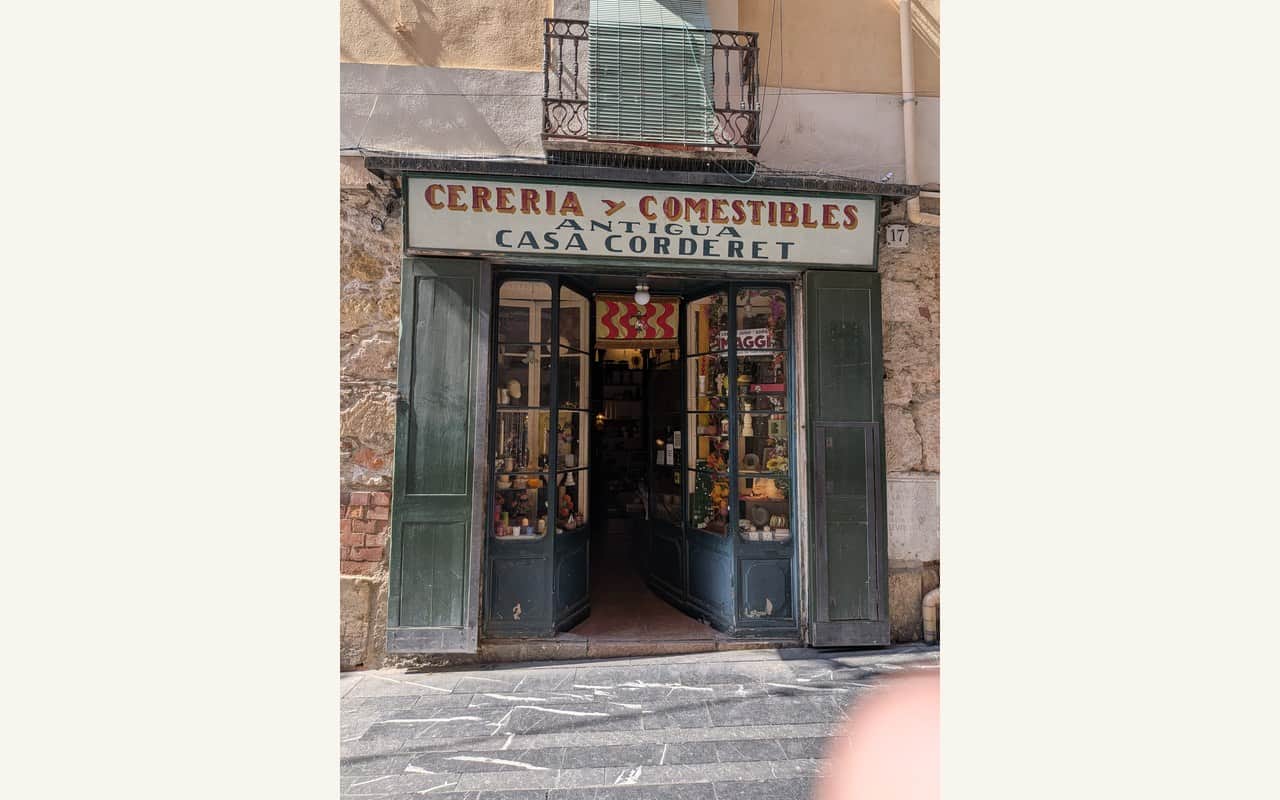
Look for the traditional candle shop in Carrer Merceria.

Don’t concentrate on the window display.

Look at the stonework of the façade.

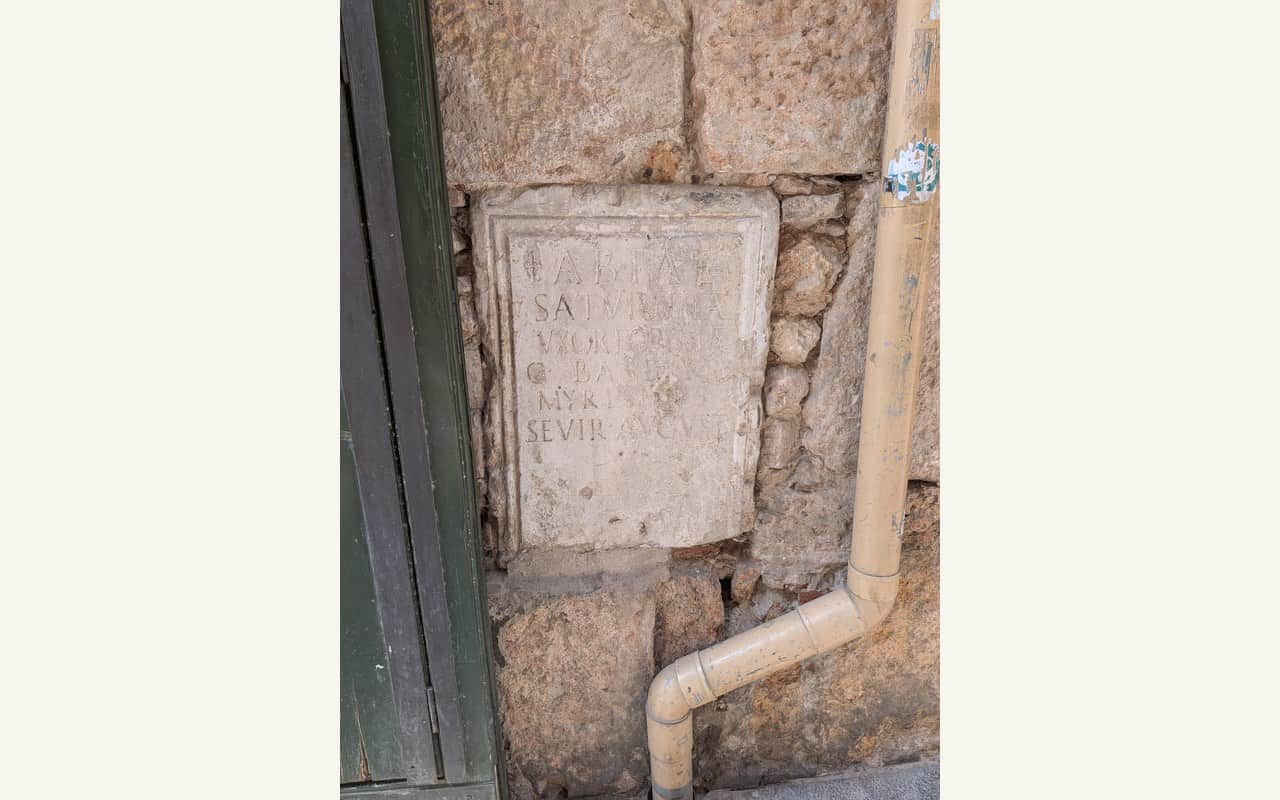
Somewhere there, an ancient stone carries letters written long before the shop — or the medieval street around it — existed.

💡 I need another clue

You are looking for Casa Corderet.

Search its stonework for carved Latin letters.

👀 I think I’ve found it — reveal the secret

The building reused a piece of Roman Tarraco.

Throughout the Part Alta, stone from Roman monuments was reused in buildings constructed many centuries later.

Casa Corderet, a historic candle shop in Carrer Merceria, is one of the places where ancient inscribed stone can still be noticed in a later façade.

Even one of Tarragona’s oldest shops is young compared with the stones around it.

Casa Corderet traditional candle shop in Carrer Merceria, Tarragona Roman inscribed stone reused in the façade of Casa Corderet in Tarragona

🏛️ Documented History

8 Roman Tarragona

The Forum Hidden in Plain Sight

You are about to enter a square whose name gives away part of its secret.

Almost two thousand years ago, this part of Tarraco belonged to an enormous monumental complex from which a whole Roman province was governed.

Most of that world has vanished beneath later Tarragona.

But one great piece of it is still standing in the square.

🔎 Your Mission

Find Plaça del Fòrum.

Ignore the tables, balconies and modern façades for a moment.

Find the surviving section of Roman wall.

Imagine the scale of the structure it once belonged to.

💡 I need another clue

The clue is much larger than the inscriptions you found earlier in the route.

This time, you are looking for a substantial Roman wall still standing above ground.

🏛️ Reveal the secret

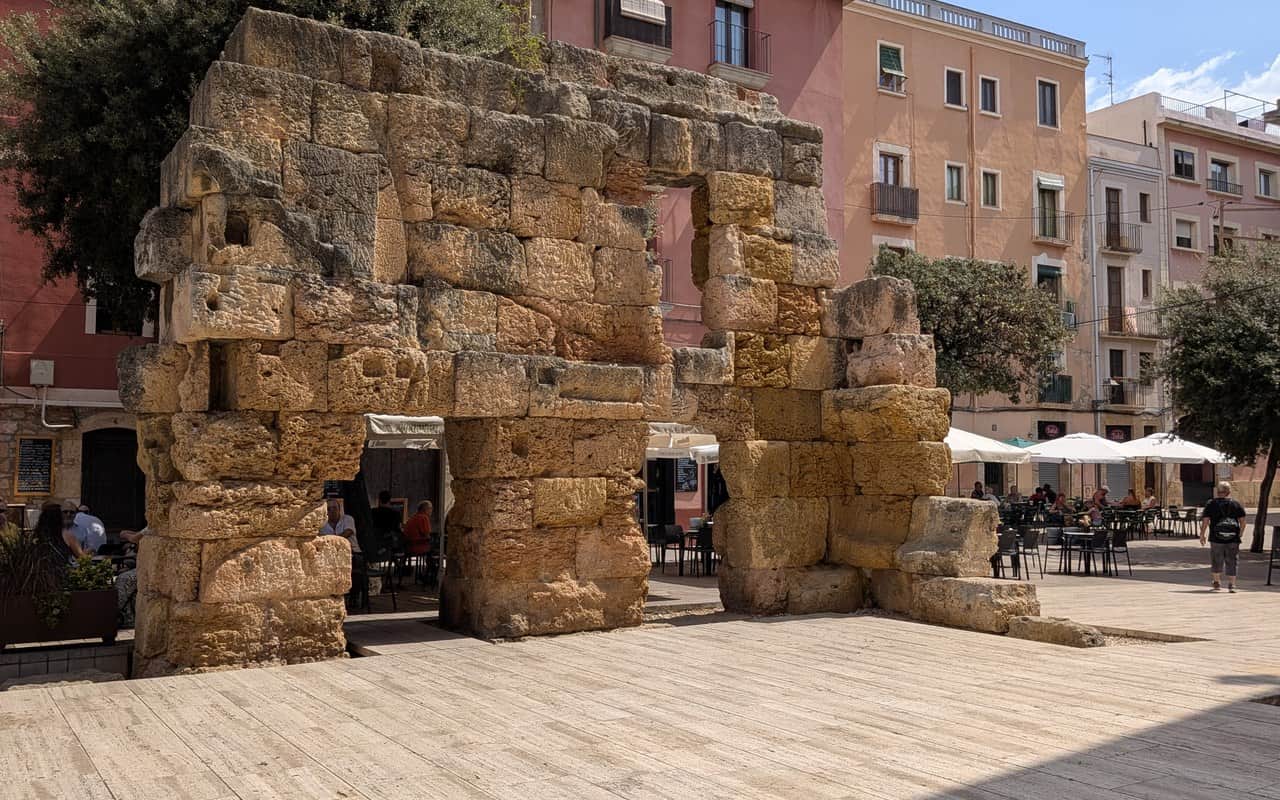
You are standing inside the former Provincial Forum of Tarraco.

Built in the first century AD, this vast complex occupied the upper part of the Roman city and was the administrative centre of the province.

Part of its enclosure wall survives in Plaça del Fòrum, incorporated into the city that grew around it.

A Roman government complex became an ordinary neighbourhood.

Surviving Roman wall of the Provincial Forum in Plaça del Fòrum, Tarragona

🏛️ Documented History

5 Tarragona · 1811

The Cannonball Above Your Head

It is 28 June 1811.

Tarragona has been under siege for weeks.

French troops are closing in and the old city is about to experience one of the darkest days in its history.

More than two centuries later, a curious object in Plaça de Sant Antoni is still associated with those violent events.

Most people walk straight past it.

🔎 Your Mission

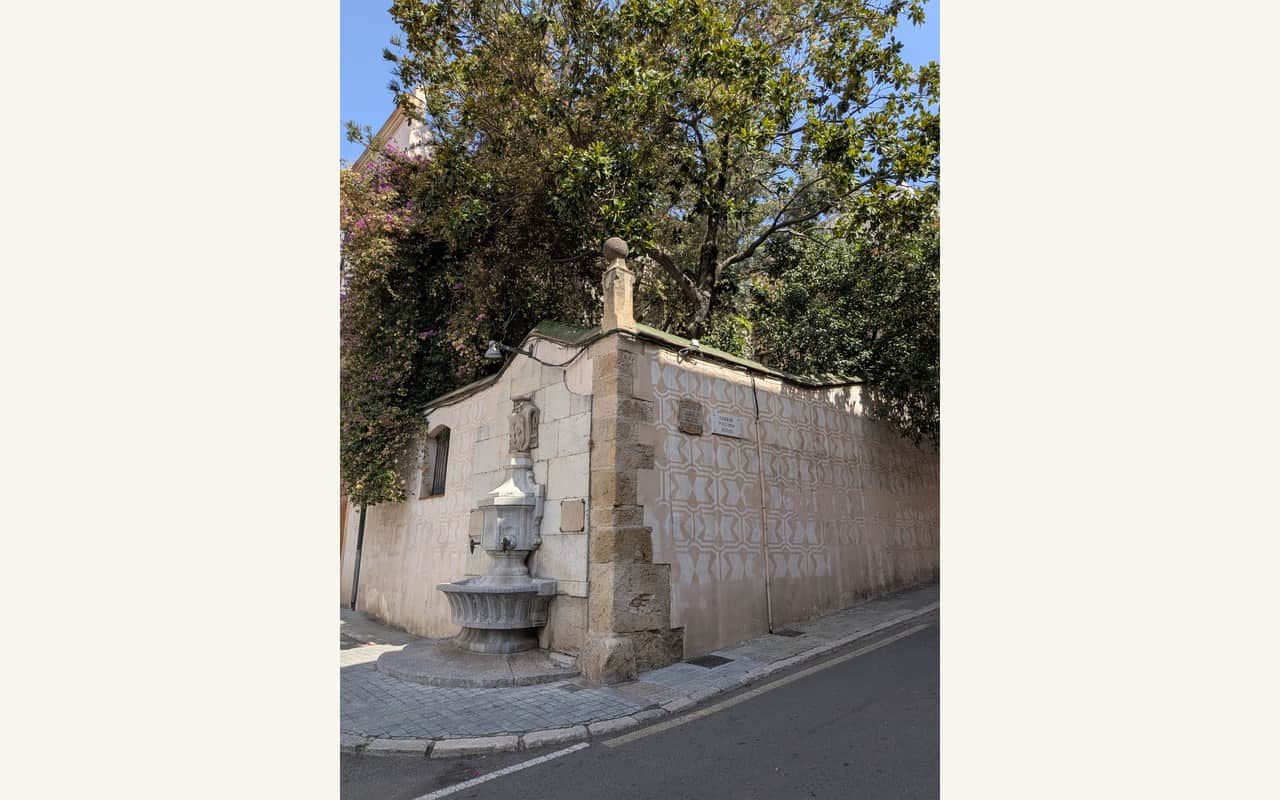
Find Plaça de Sant Antoni, beside the old city gate.

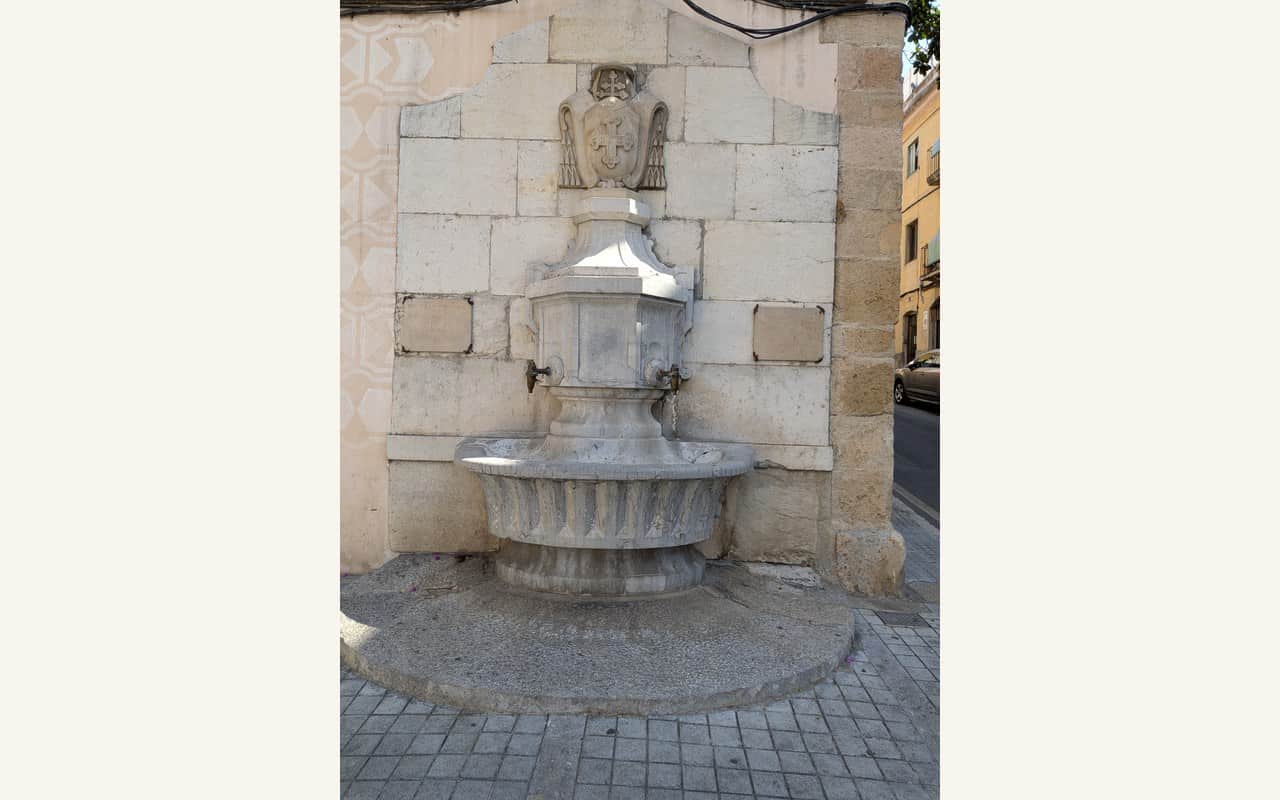
Look for the old wall with the stone fountain.

But don’t look at eye level.

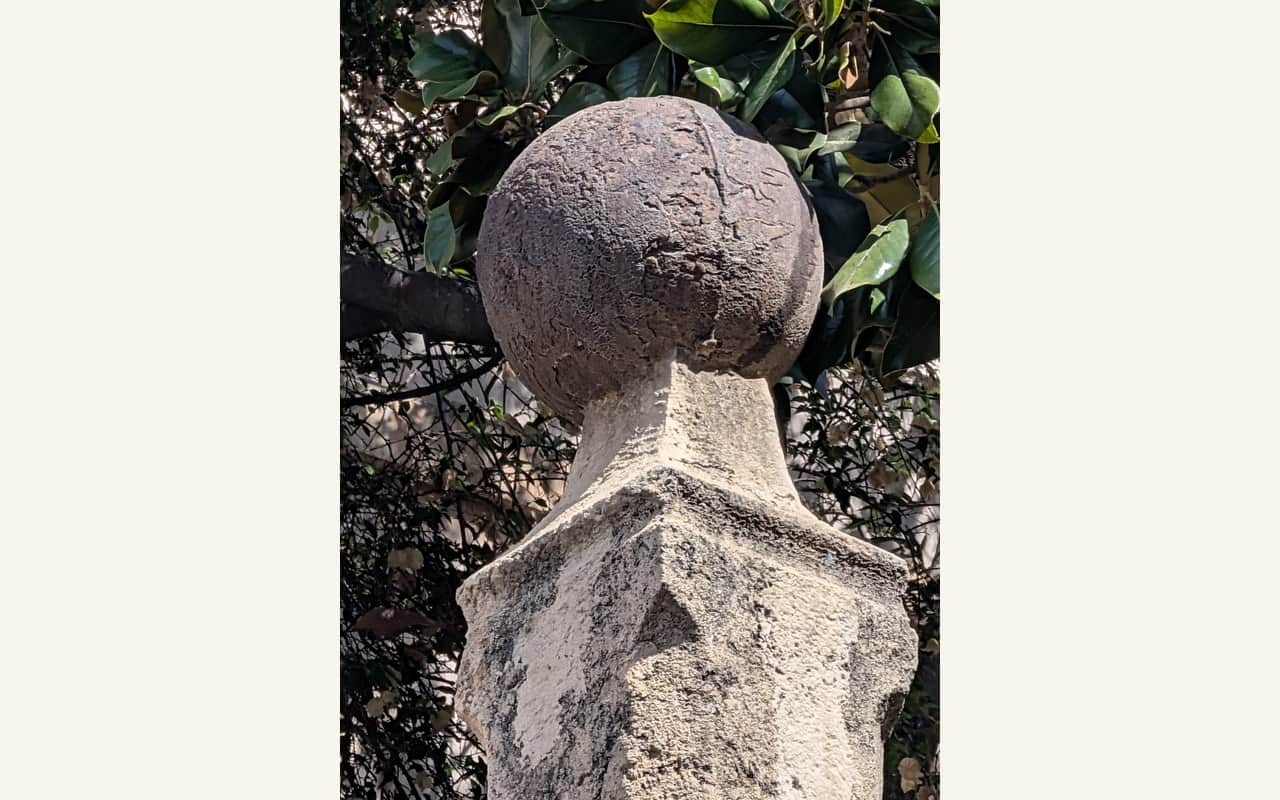
Look at the top of the stone pillar.

Something perfectly round has been watching this little square for a very long time.

💡 One more clue

Look above the fountain, at the corner of the wall.

You are searching for a large stone ball resting on top of the pillar.

💥 I’ve found it — reveal the story

The cannonball of Plaça de Sant Antoni.

Tarragona was besieged by Napoleon’s army in 1811. After weeks of bombardment and fighting, French troops under General Suchet finally captured the city on 28 June.

According to local tradition, the stone ball you have just found is connected with the fighting that affected Tarragona and its fortifications during that period.

The siege of Tarragona is a documented historical event. The traditional identification of this particular ball with the fighting of 1811, however, is part of the story passed down locally.

Sometimes the smallest details in Tarragona carry the biggest stories.

Old wall and fountain at Plaça de Sant Antoni in Tarragona Stone fountain beside Plaça de Sant Antoni in Tarragona Stone ball traditionally associated with the 1811 siege in Plaça de Sant Antoni, Tarragona

◐ Documented Historical Context · Local Tradition

From here, follow Passeig de Sant Antoni towards Plaça del Rei.

4 Medieval Tarragona

A City Within the City

Not far from the Cathedral there was once another Tarragona.

It had families, a place of worship, community buildings and its own streets.

Much of it disappeared.

But not everything.

🔎 Your Mission

Find a small square whose name refers to angels.

Nearby, look for old stone arches.

They are one of the clues to a community that lived here centuries ago.

✡️ Reveal the lost city

You have entered Tarragona’s medieval Jewish quarter.

The Call occupied this area behind the Cathedral.

Tarragona’s Jewish community had its own institutions and played an important role in the medieval city.

Ca la Garsa and the surrounding streets preserve fragments of that almost vanished world.

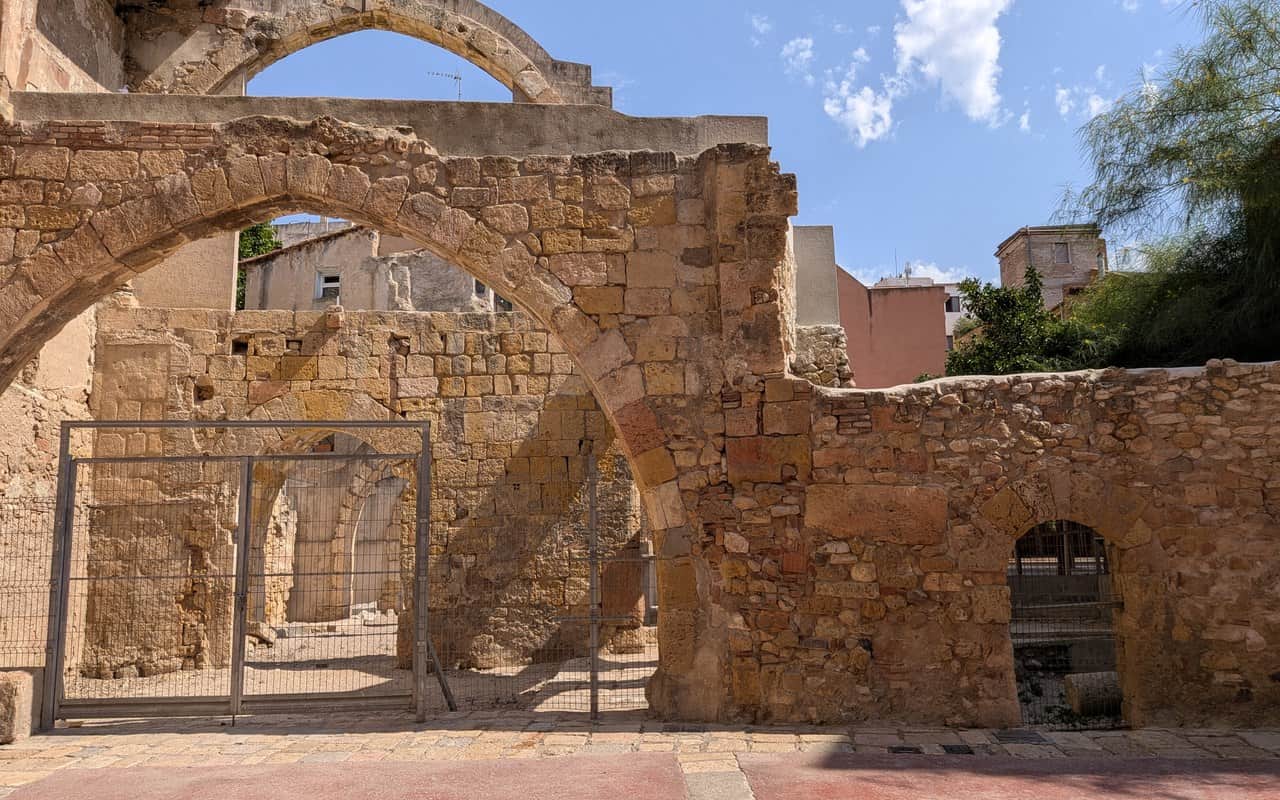
Stone remains of Ca la Garsa in Tarragona's medieval Jewish quarter Historic stone arches at Ca la Garsa in the old Jewish quarter of Tarragona

🏛️ Documented History

6 Rome to the 20th Century

Two Thousand Years Inside One Building

Continue to Plaça del Rei.

One building here has lived several completely different lives.

It was Roman.

It became part of medieval Tarragona.

And centuries later, it became a prison.

The same stones have seen power, war and imprisonment.

🔎 Your Mission

Find the great stone tower beside Plaça del Rei.

Before revealing the answer, try to guess which of its many lives came first.

🏛️ Reveal the building

The Praetorium — traditionally known as Pilats.

Its origins are Roman and connected with the monumental complex of the Provincial Forum.

The structure was adapted repeatedly during later centuries.

In modern times, part of the building also served as a prison.

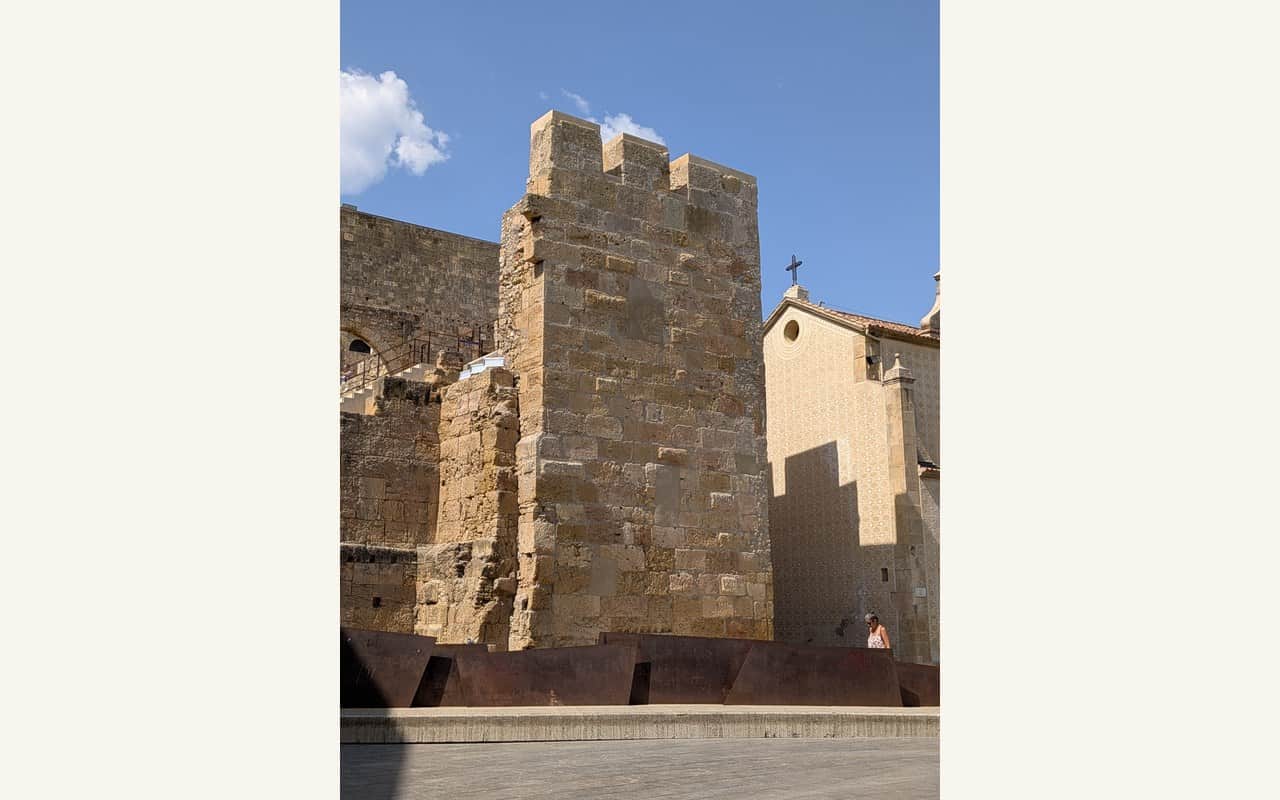
Roman Praetorium, traditionally known as Pilats, beside Plaça del Rei in Tarragona

🏛️ Documented History

7 Roman Tarragona

Find a Roman Circus You Cannot See

Do not leave this part of the city too quickly.

Somewhere beneath the streets around you once stood one of Tarraco’s greatest entertainment venues.

Thousands of spectators came here to watch chariots race at dangerous speed.

Today, you can stand inside it and still fail to notice it.

That is exactly your challenge.

🔎 Your Mission

Explore the area around the Roman Circus and the streets immediately below Plaça del Rei.

Look at the shape of the spaces and the ancient structures absorbed into later buildings.

Where is the Roman Circus?

💡 I need another clue

You are not simply standing beside it.

Parts of the modern city are standing on and inside it.

🐎 Reveal the secret

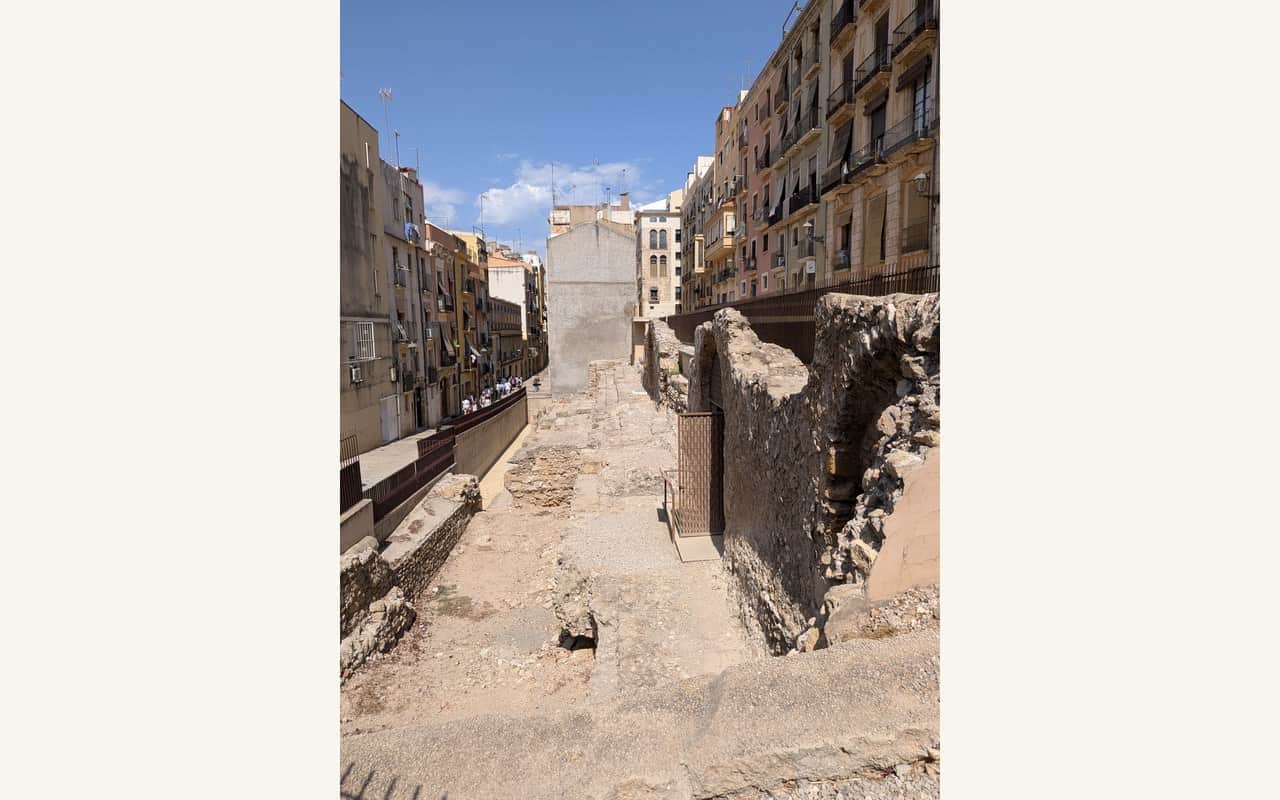
Later Tarragona grew over the Roman Circus.

Roman vaults and structures were absorbed into later streets and buildings.

The great arena once stretched through this lower terrace of the Roman monumental complex.

In Tarragona, archaeology is often not beside the city. It is underneath it.

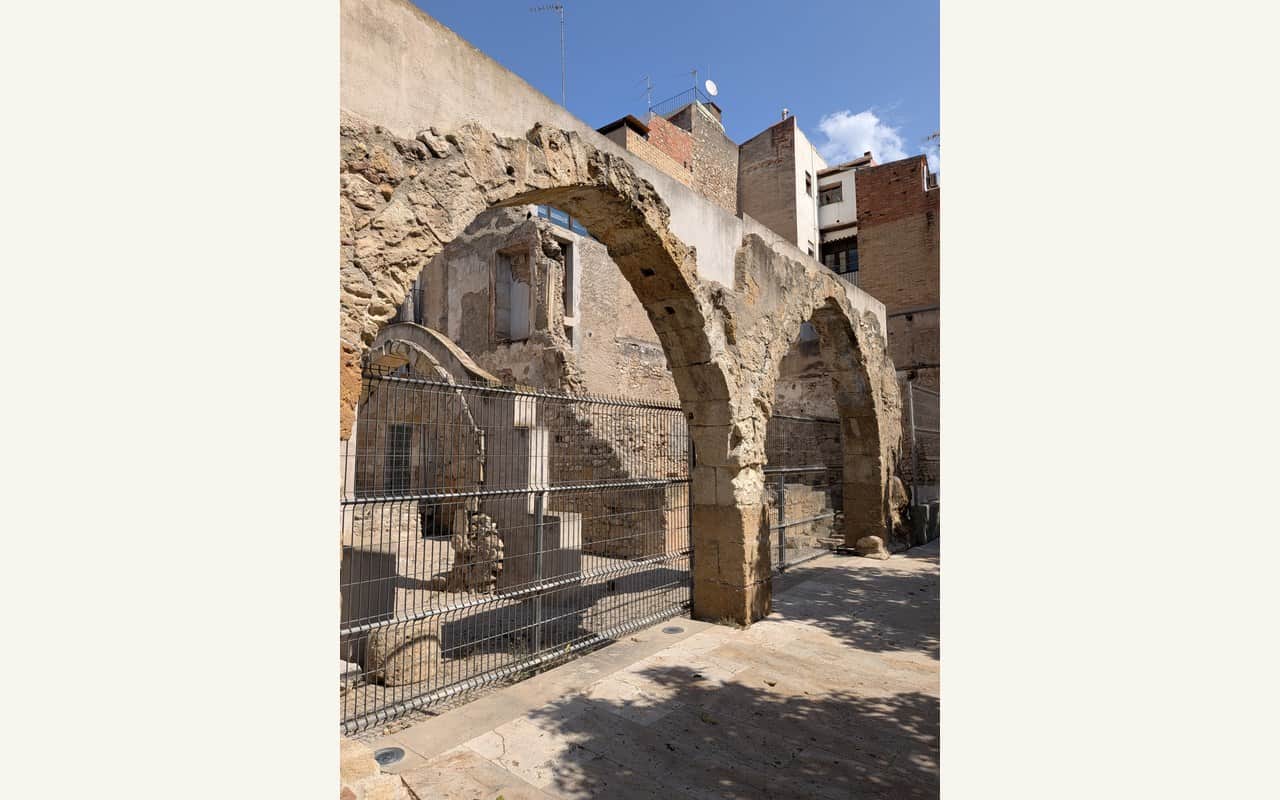
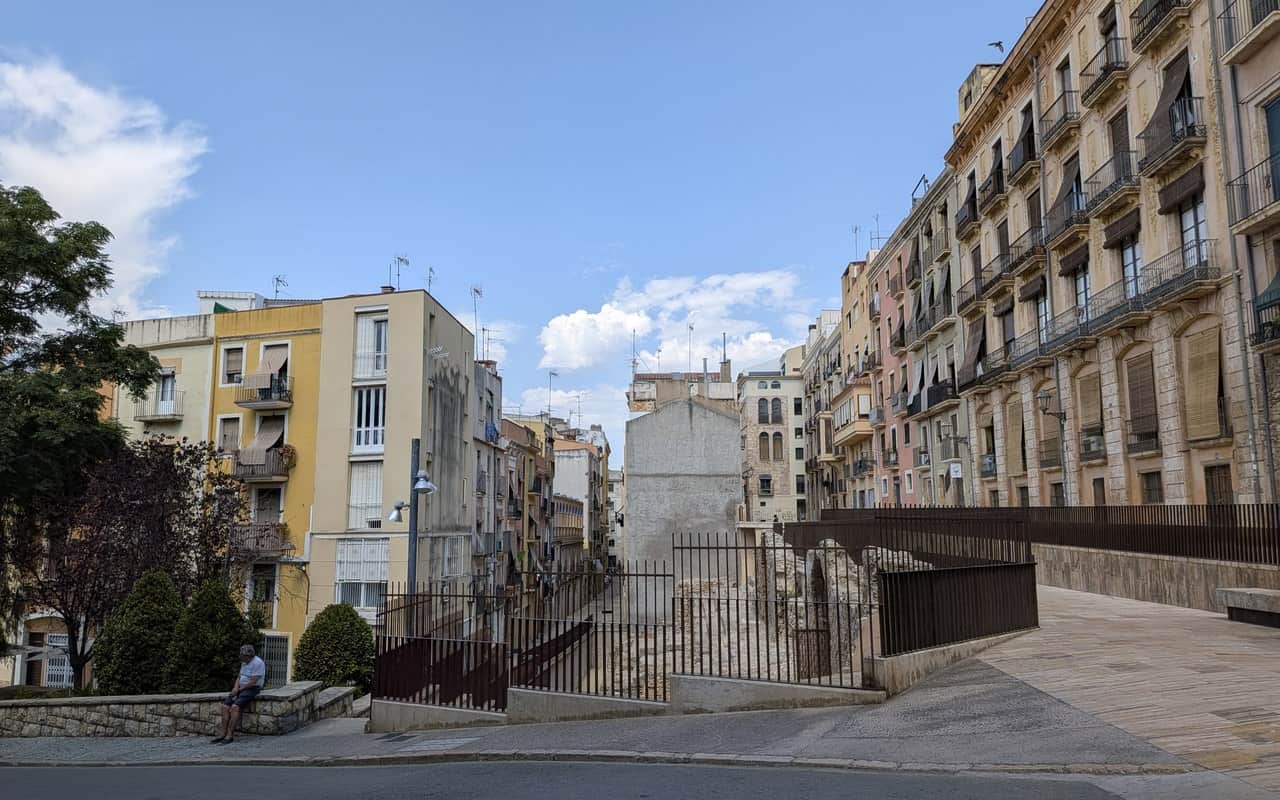
Modern Tarragona built over and around the ancient Roman Circus Visible remains of the Roman Circus integrated into modern Tarragona

🏛️ Documented History

Now climb back into the Part Alta and look for a square that still carries the name of a Roman forum.

9 Renaissance Tarragona

The House Where an Emperor Slept

Continue through the old town towards Carrer dels Cavallers.

In this historic street, one house remembers an extraordinary visitor.

He ruled over territories stretching across Europe and beyond.

And in 1542, he stayed here.

🔎 Your Mission

Find Carrer dels Cavallers.

Look for one of its grand historic houses.

Which one is associated with Emperor Charles V?

💡 One more clue

The house is known today as Casa Castellarnau.

👑 Reveal the story

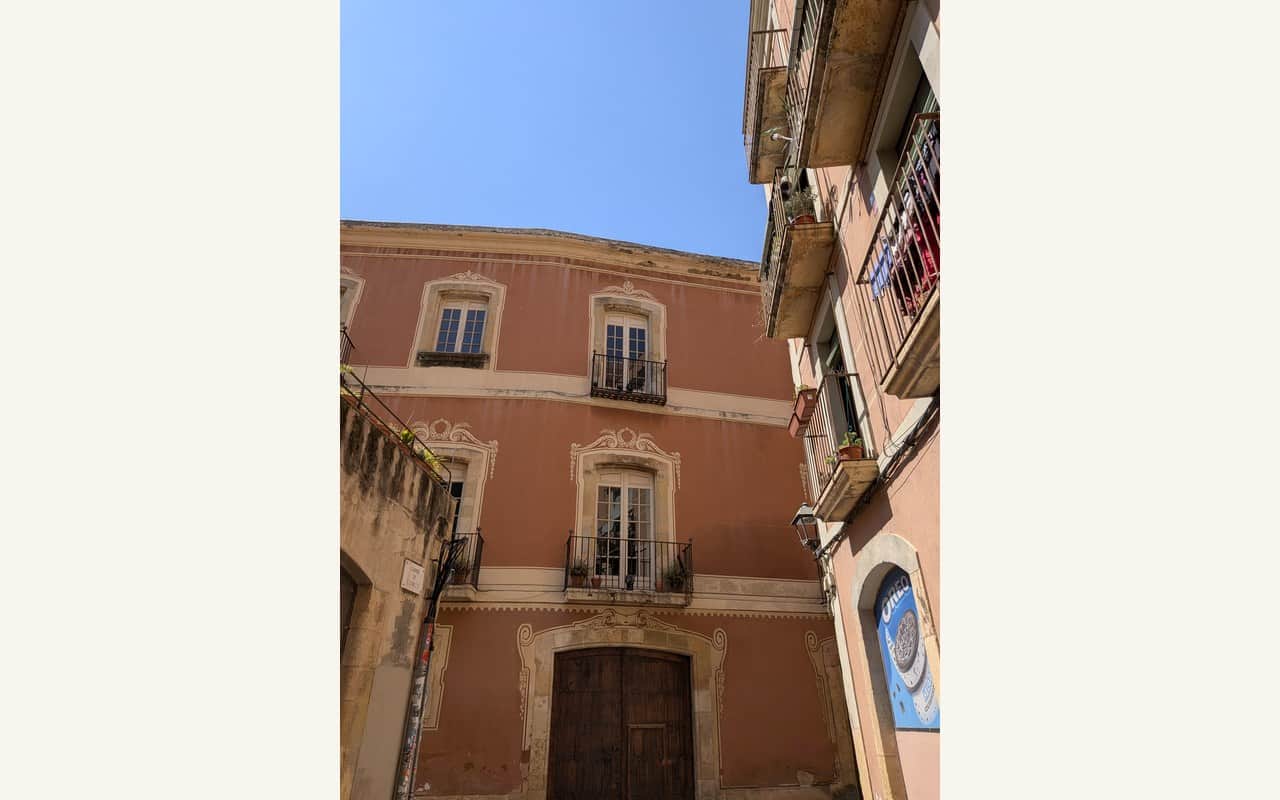
Charles V stayed here.

The buildings that later formed Casa Castellarnau were linked to the emperor’s visit to Tarragona in 1542.

The house itself reflects the layered history of the Part Alta, where later residences often stand over much older structures.

Casa Castellarnau in Carrer dels Cavallers, Tarragona

🏛️ Documented History

One final secret remains. Head towards Portal del Roser and look at the wall before you leave the old city.

10 Rome & the French War

The Man Inside the Wall

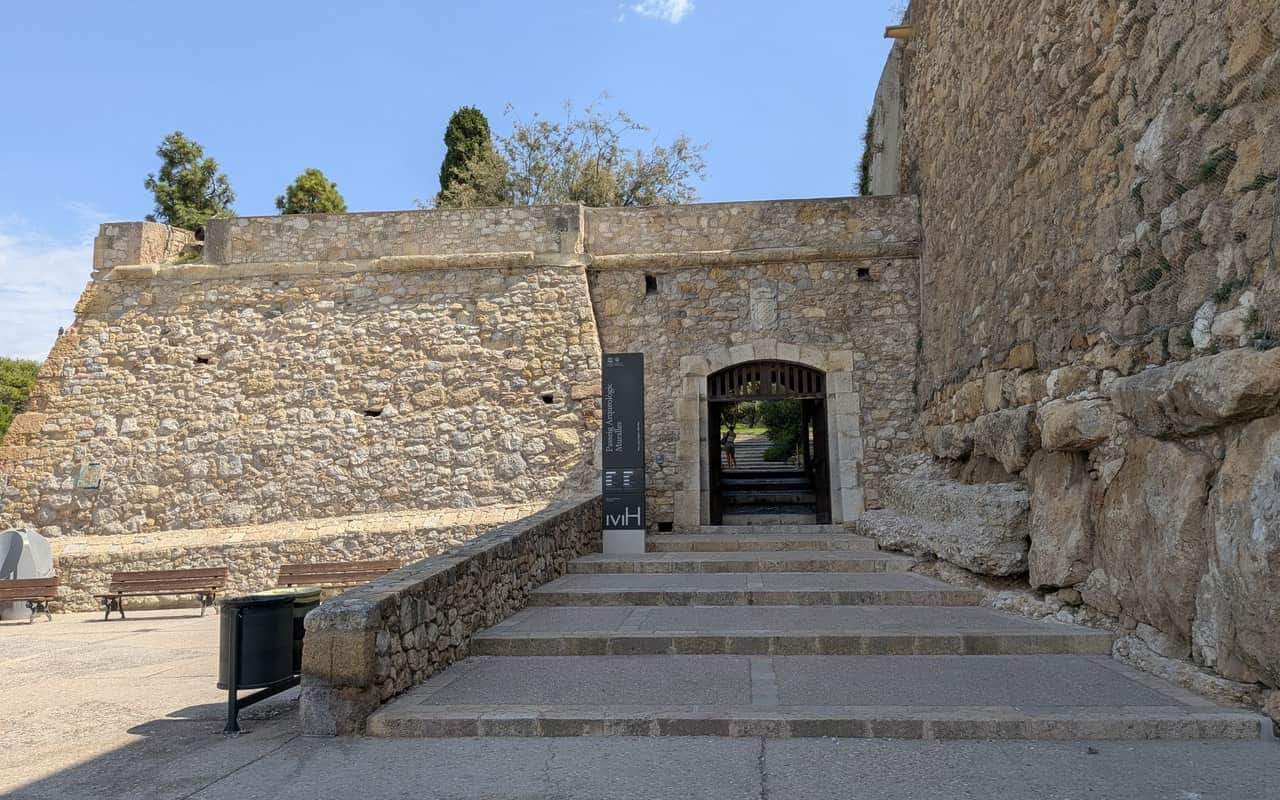
You have reached Portal del Roser.

Before leaving the old city, stop and look carefully at the wall.

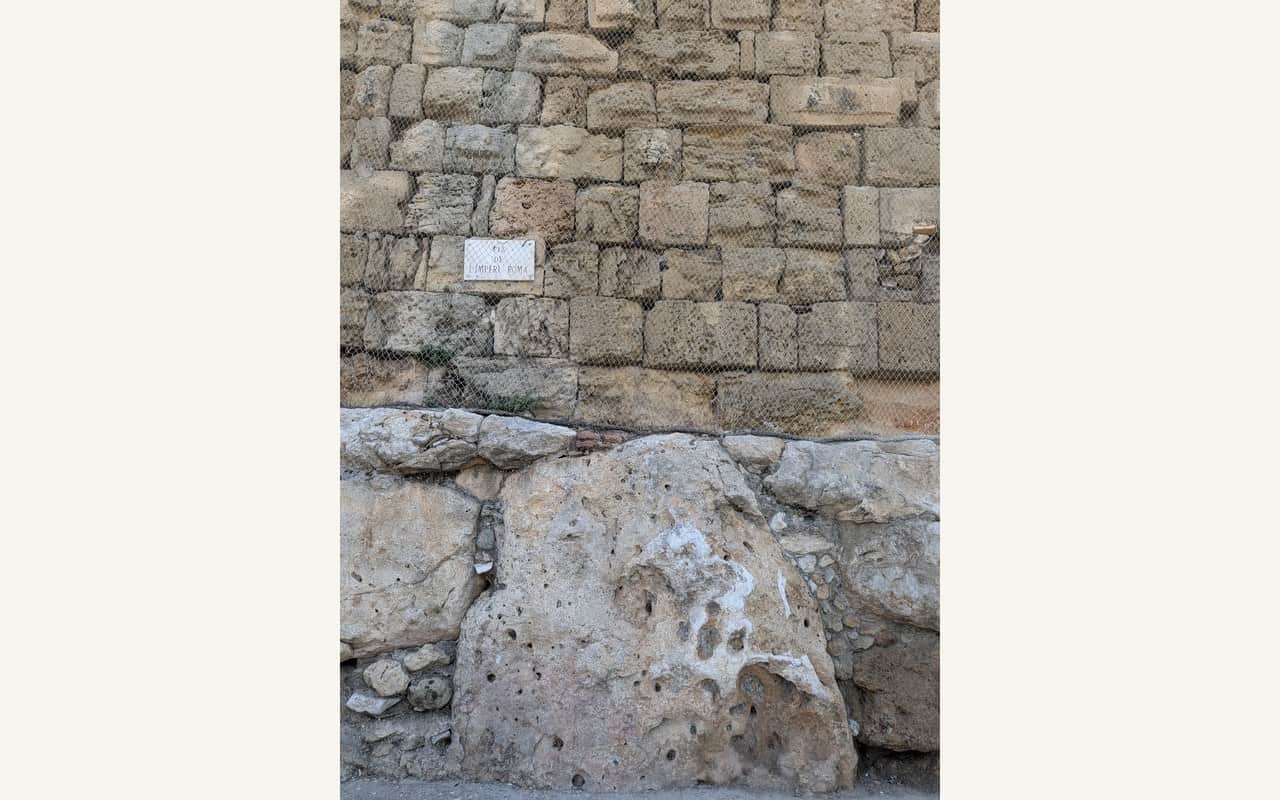
These stones were not all placed here at the same time.

Some belong to Roman Tarragona. Others tell the story of centuries of repairs, fortifications and war.

And according to an old local story, the wall once gave up one final secret.

🔎 Your Final Mission

Stand beside Portal del Roser and study the masonry.

Look at the different sizes and arrangements of the stones.

Can you identify the oldest Roman blocks?

Once you have found them, reveal the final story.

💡 I need another clue

Compare the enormous stone blocks with the smaller and more regular masonry around them.

The wall itself is a timeline.

👀 Reveal the final secret

More than two thousand years are standing in front of you.

Tarragona’s Roman wall was constructed in different phases and was repaired and transformed repeatedly in later centuries. Around Portal del Roser, the changing masonry makes those layers especially easy to notice.

But there is another story connected with Tarragona’s walls.

A tradition repeated by local guides tells that, during renovation work in a house built into the old fortifications, workers discovered the mummified body of a French soldier hidden inside the wall.

The story is usually linked to the violent years of the French siege and occupation of Tarragona.

Was the soldier really found there? So far, we have not found documentary evidence strong enough to prove the story exactly as it is told.

Perhaps it happened. Perhaps Tarragona simply needed one last secret to keep inside its walls.

Portal del Roser and the ancient walls of Tarragona Ancient Roman masonry beside Portal del Roser in Tarragona's city wall

🏛️ Roman Wall: Documented History · ◐ Soldier: Local Tradition

🗝️

You Found the Tarragona They Don’t Tell You About

You have walked through Roman Tarraco, medieval Tarragona, the old Jewish quarter, Renaissance houses and the scars and stories left by later wars.

You began with ancient funerary stones hidden in a façade and ended beside a wall that has guarded Tarragona for more than two thousand years.

But perhaps the most important secret is this:

Tarragona does not keep its history in museums alone. It hides it in walls, houses, streets and beneath your feet.

From now on, look closely. The city still has many secrets left to find.

History or Legend?

🏛️ Documented History
Supported by historical or archaeological evidence.

Local Tradition
A story associated with Tarragona, although some details cannot be proven.

👻 Legend
A story Tarragona has told for generations. Believe it... or don’t.

©2026 Logotipo Todos los derechos reservados - Powered byLodgify