
01
Nature everywhere
Flowers, leaves, curves and shapes borrowed from nature appear on façades, windows and balconies.
Gaudí was born here. Curiously, he didn't build here. What Reus has instead is a city full of Modernisme — and it is very easy to discover on foot.
If you are spending a few days in Tarragona and feel like seeing somewhere different, Reus is an easy escape. You can go by train, spend most of the day walking and be back in Tarragona in the evening.
I wouldn't try to turn it into an architecture lesson. Start in Plaça del Mercadal, look up, and let the details do the work.

You really don't need to know much. Once you notice a few things, spotting Modernisme while you walk becomes surprisingly fun.
Flowers, leaves, curves and shapes borrowed from nature appear on façades, windows and balconies.
Stained glass, ceramics, carved stone and wrought iron become part of the building rather than simple decoration.
Even a balcony or doorway becomes an excuse to make something individual and a little theatrical.
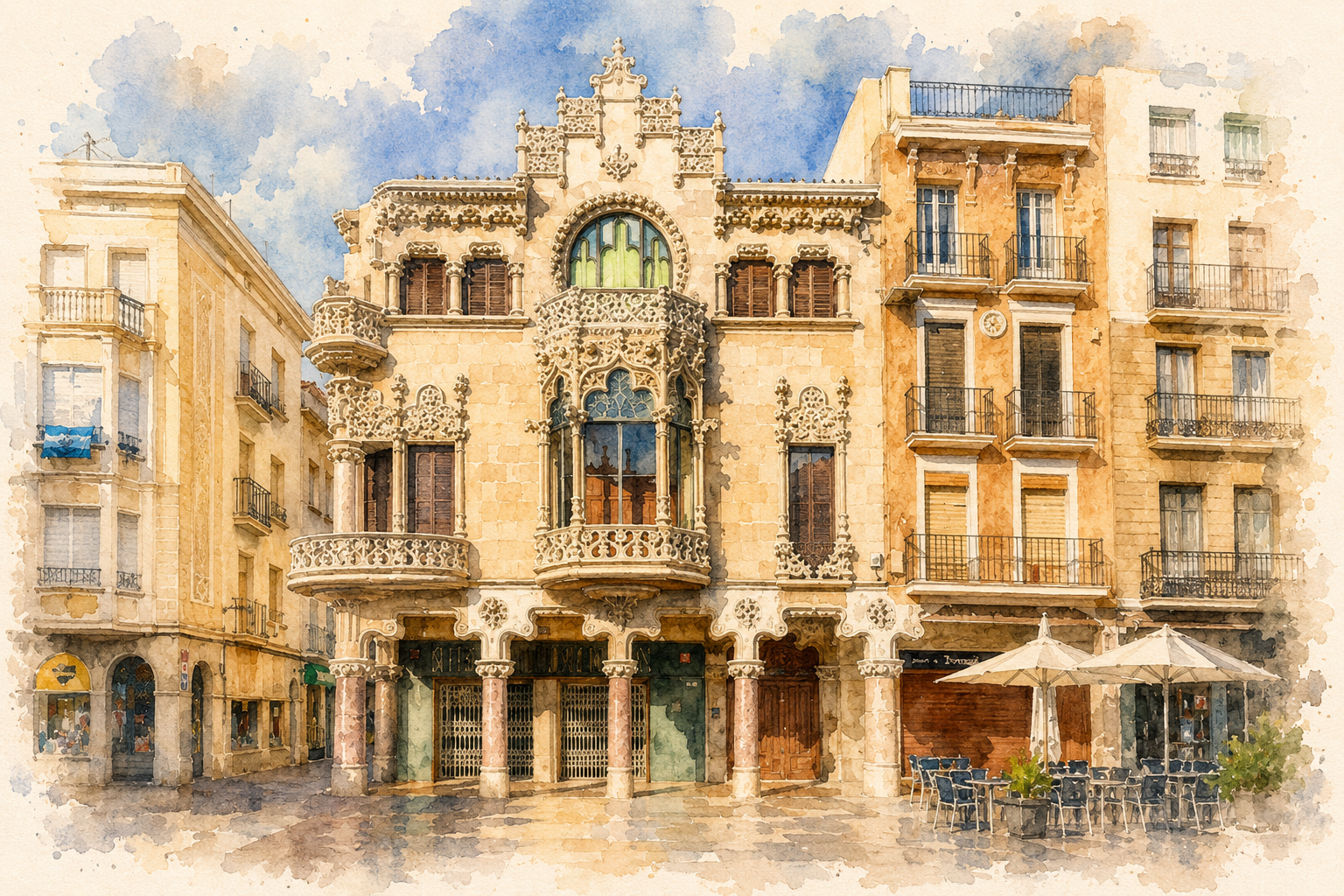
This is the building I wouldn't miss.
It stands right on Plaça del Mercadal and even from outside there is an extraordinary amount to look at. But if you can visit the interior, I would.
Inside, the stained glass, furniture, ceramics and decoration make it much easier to understand what Modernisme was about than any long explanation could.
Take the train from Tarragona railway station to Reus.
From Reus station, walk towards the historic centre and Plaça del Mercadal. It is an easy walk of roughly 15 minutes, and once you reach the centre you can do the rest of the day on foot.
I would check the train times before leaving Tarragona, especially the return journey.
Arrive, have a look around and begin with Casa Navàs.
Walk through the centre and start looking for the balconies, stained glass and decorated façades.
Stop before the afternoon becomes another list of things to see.
For this particular day, this feels like a nice place to stop.
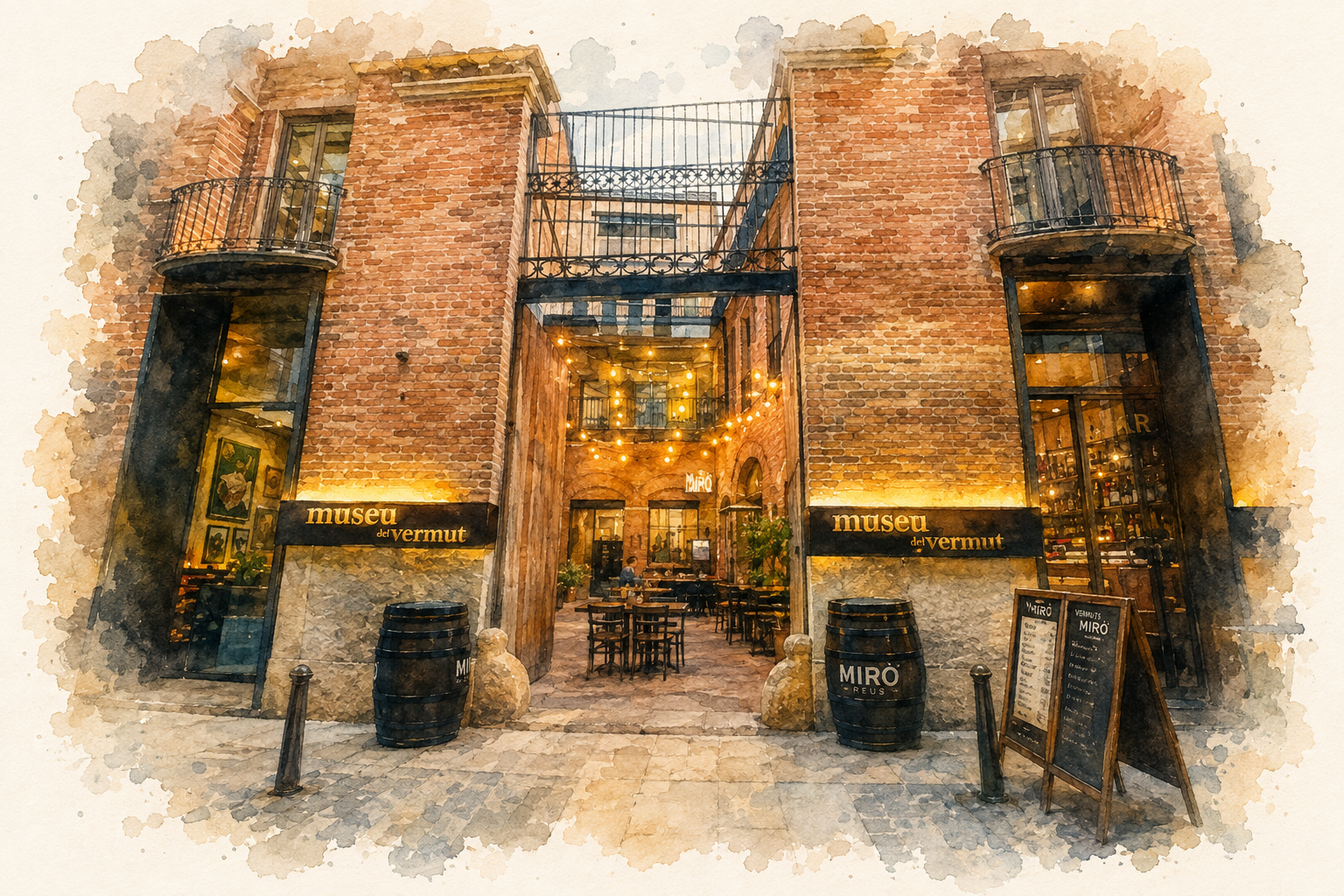
The restaurant is inside a 1918 industrial building by Reus architect Pere Caselles, so it actually belongs to the city's Modernist route.
And then there is the vermut. Reus has a long relationship with it, so lunch here connects two sides of the city without having to make too much of either.
I would come for lunch — or simply stop for a vermut if you prefer to keep wandering afterwards.
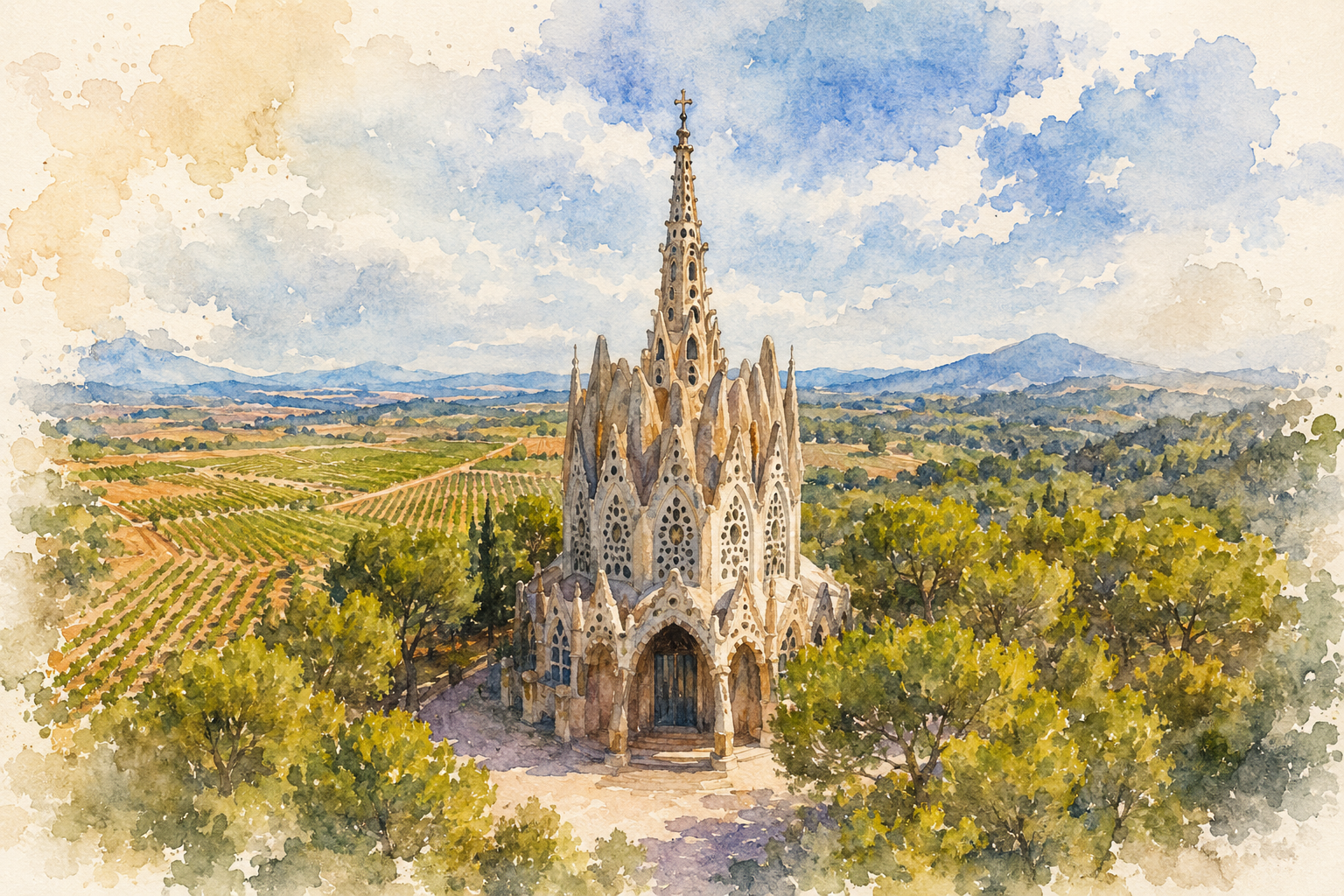
This isn't part of the Reus day trip. I would save it for another outing.
The Santuari de la Mare de Déu de Montserrat de Montferri is not by Gaudí, but by Josep Maria Jujol, one of the architects who worked with him.
You find it almost unexpectedly among vineyards and countryside in the Alt Camp. It is one of those buildings that makes you want to stop the car simply to work out what you are looking at.
See Casa Navàs, wander a little, stop for lunch and enjoy Reus at your own pace. Once you start noticing Modernisme, you will probably find yourself looking up much more often.