
The Mediterranean Coast
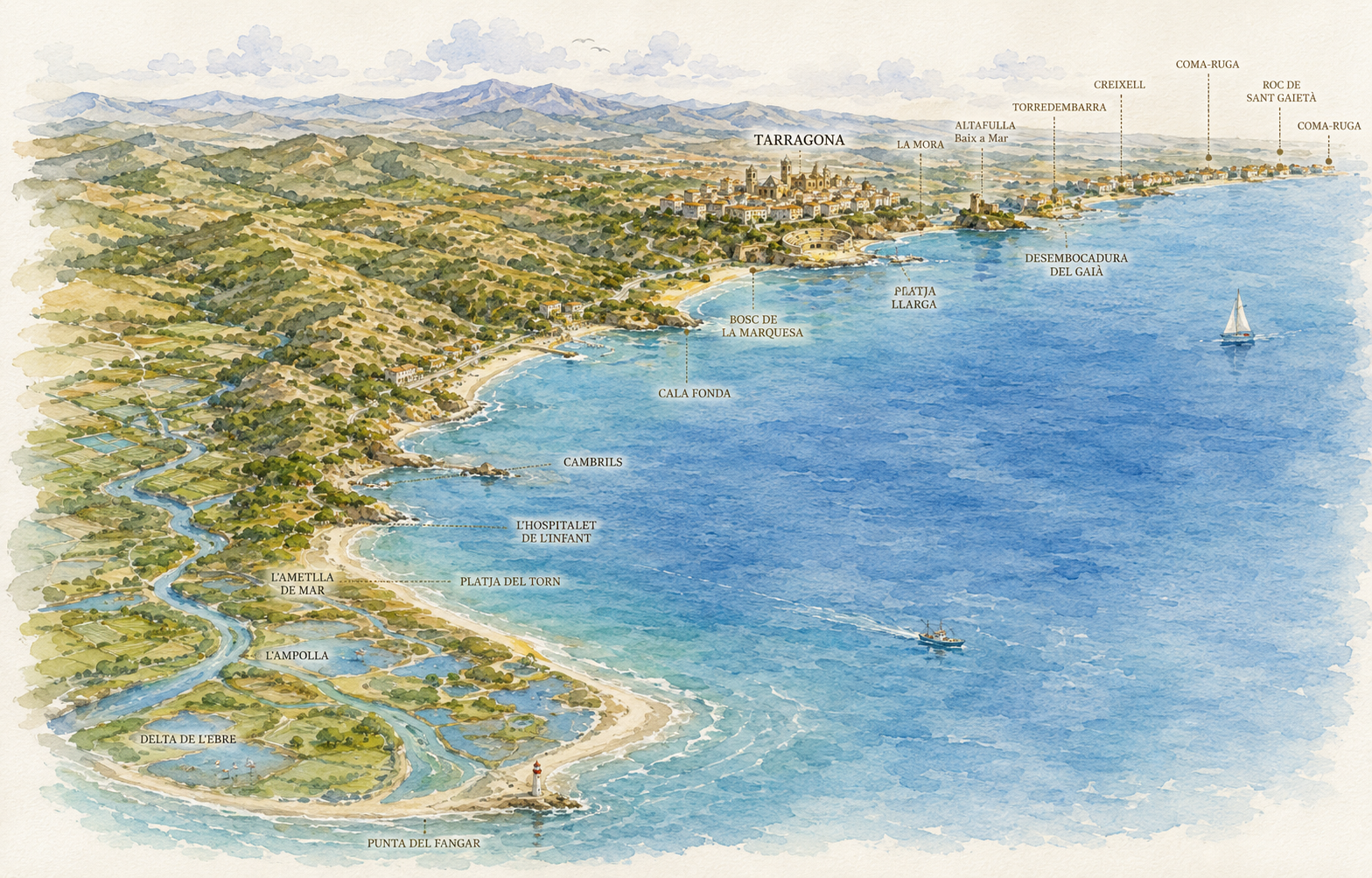
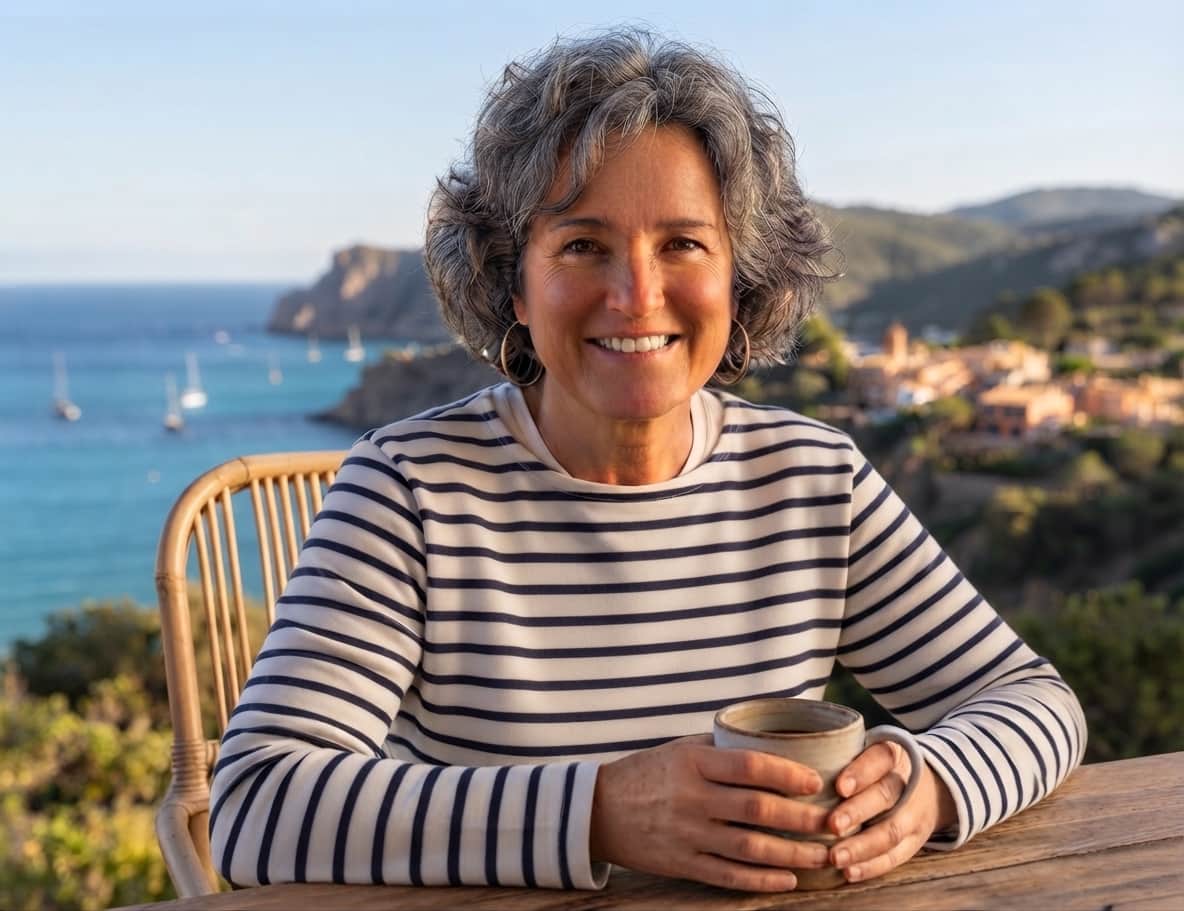
What I love about this coast is how quickly it changes.
Tarragona is often associated with its beaches, but for me the most interesting thing is not one particular beach. It is the variety of landscapes you find along the same stretch of Mediterranean.
Close to the city, pine forest reaches almost to the water and hides small coves. A little further on, the Gaià meets the sea beside Tamarit, dunes protect the wetlands of Els Muntanyans and coastal paths follow the rocky shoreline.
Travel south and the landscape changes again: mountains approach the sea, fishing villages appear between coves and eventually everything opens into the extraordinary flat horizons of the Ebro Delta.
That variety, all along one Mediterranean coastline, is what makes this part of Tarragona so special to me.

One coastline, many landscapes
The Mediterranean is always close in Tarragona. But follow the coast and it never looks quite the same.
Long beaches become rocky coves, pine forest reaches the water, dunes protect wetlands, fishing harbours appear between headlands and, eventually, the mountains give way to one of the most extraordinary landscapes on the Mediterranean: the Delta de l'Ebre.
Where the city gives way to the Mediterranean
Leave Tarragona towards the north and the urban coastline disappears surprisingly quickly.
Platja Llarga stretches beneath low Mediterranean hills, while the Bosc de la Marquesa protects one of the most natural sections of coast close to the city. Pines, rock and small coves reach almost to the water.
Cala Fonda, La Móra and the paths through the forest belong to the same landscape: a Mediterranean edge that still feels remarkably untouched.
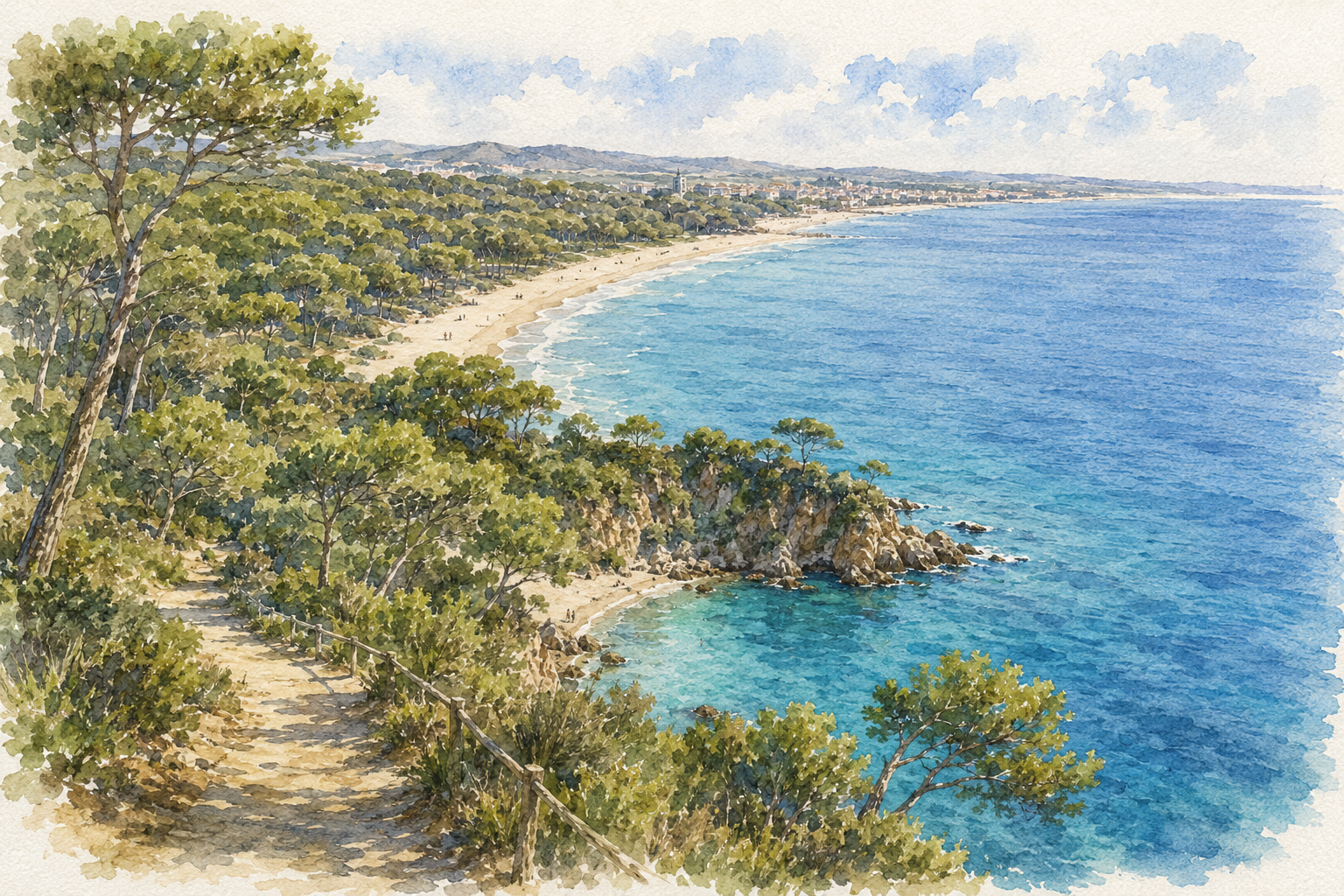
Two Coastal Days Beyond Tarragona
A slow route through Platja Llarga, the Bosc de la Marquesa, La Móra, Tamarit and Altafulla — all within easy reach of Tarragona.
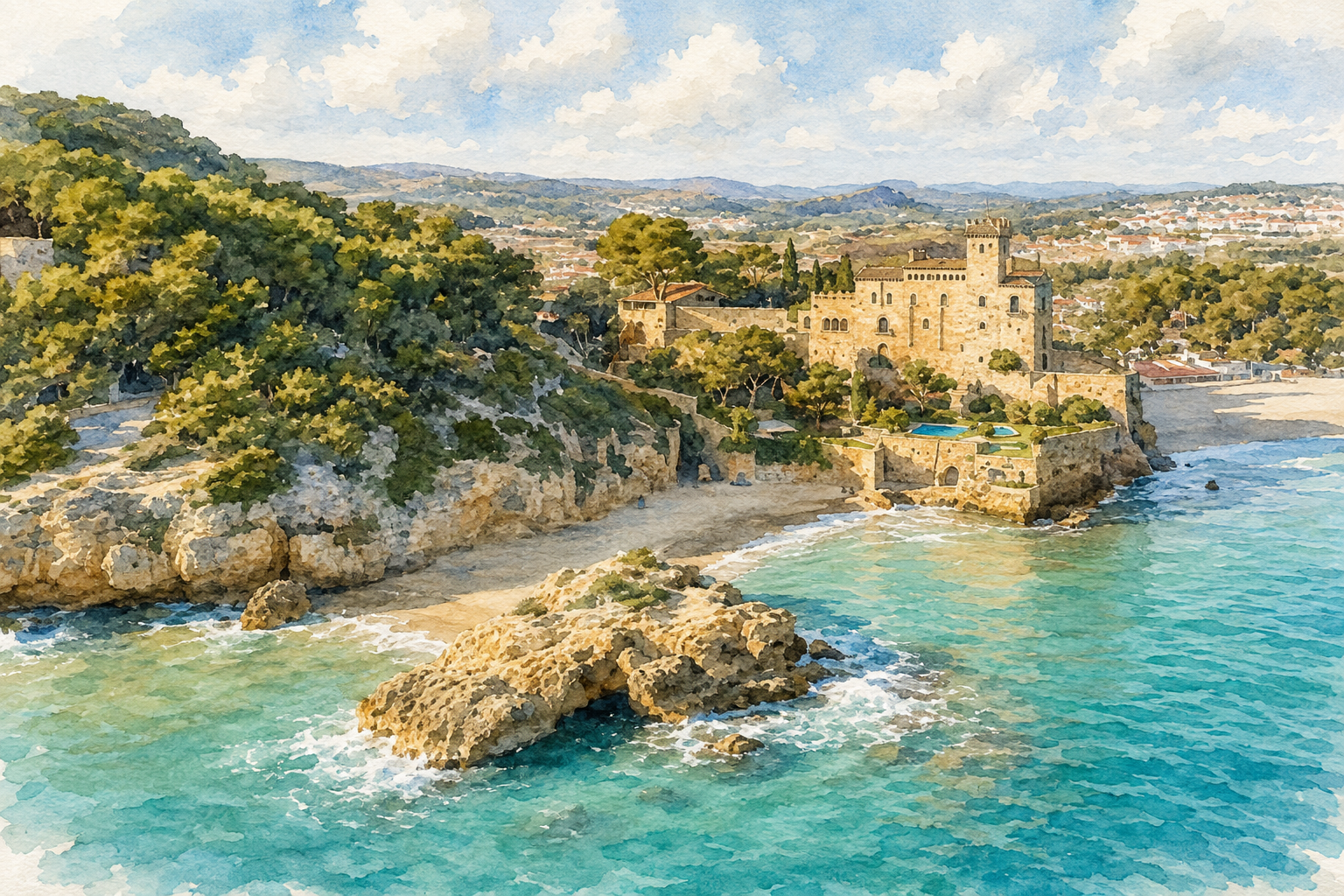
Where landscape and history meet the sea
At Tamarit, the coast tells another story. Stone walls rise directly above the Mediterranean, with forest and beach gathered around the headland.
Just beyond the castle, the river Gaià reaches the sea. It is a small detail on the map, but an important one: the coast here is connected to the valleys and landscapes of the interior.
A coast that has always been inhabited
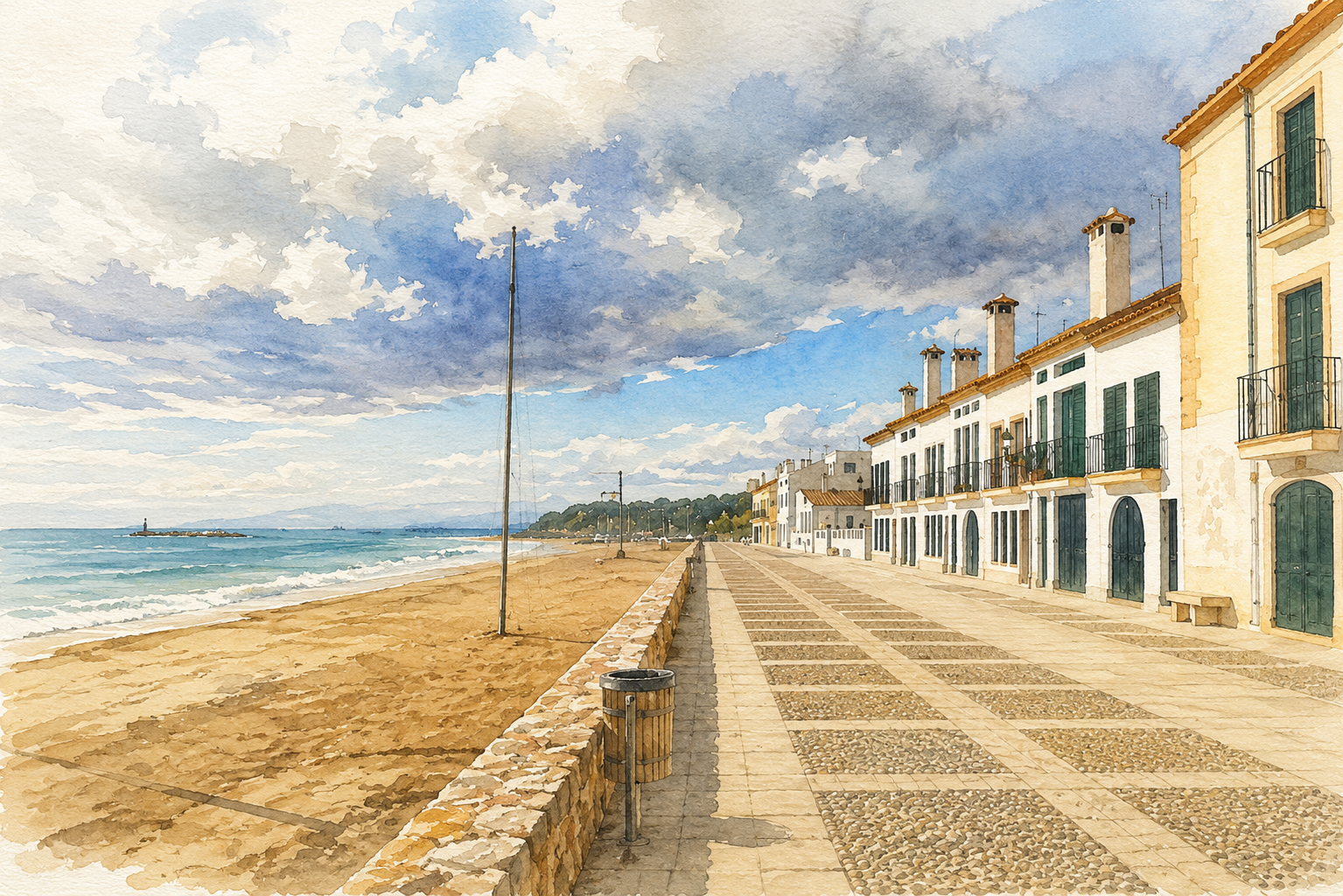
A little further north, Baix a Mar in Altafulla brings houses right to the edge of the beach.
The relationship with the Mediterranean changes again. This is no longer only a natural coastline, but a lived one — houses, fishing, paths and everyday life facing directly towards the sea.
A landscape built by sand and wind
Around Torredembarra, the Mediterranean creates another kind of landscape.
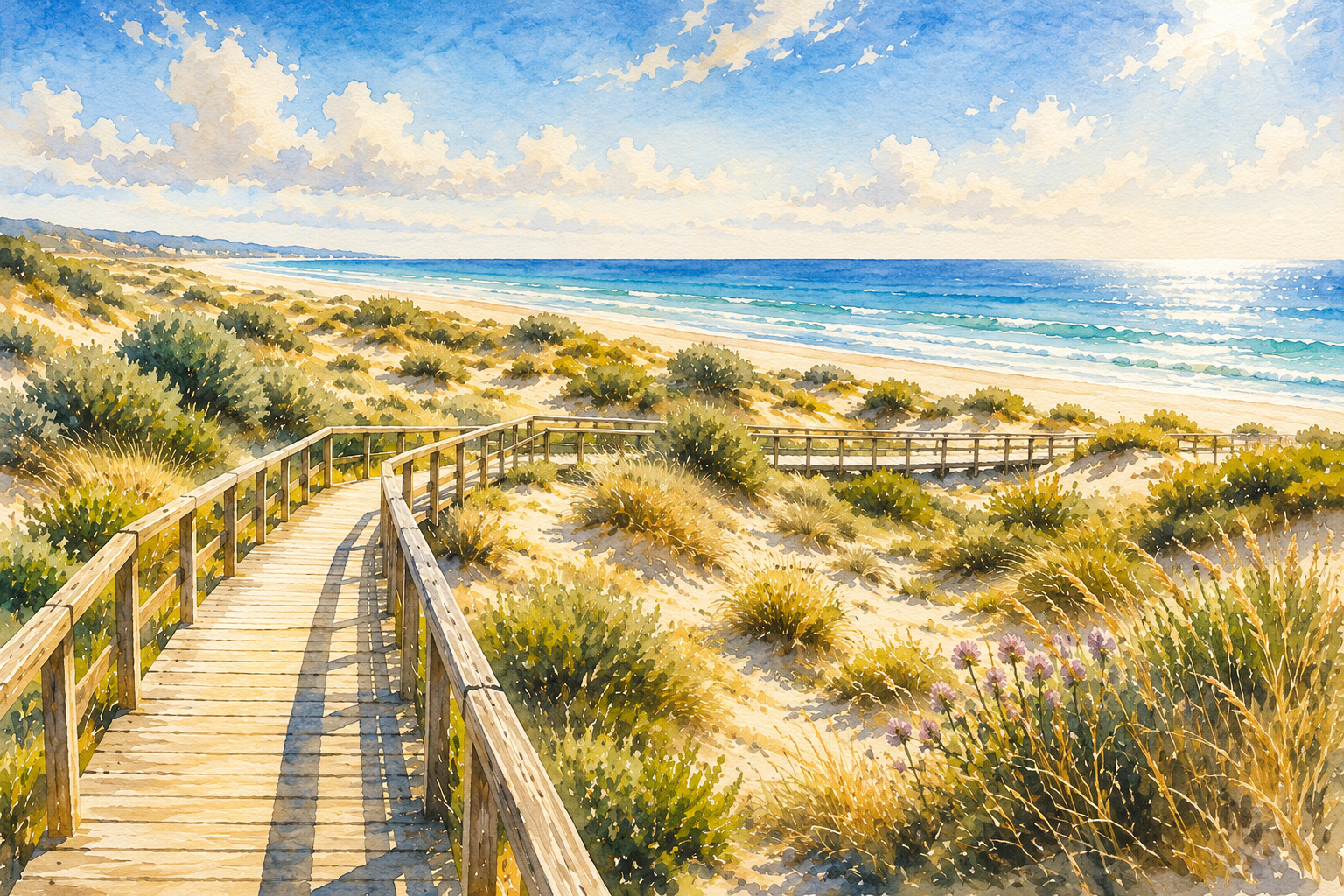
Behind the long beach of Els Muntanyans, dunes and coastal vegetation form a natural barrier between the sea and the wetlands behind them.
Wooden walkways cross this fragile landscape, allowing the dunes and their vegetation to remain protected while the Mediterranean stays constantly visible beyond them.
A village above the sea
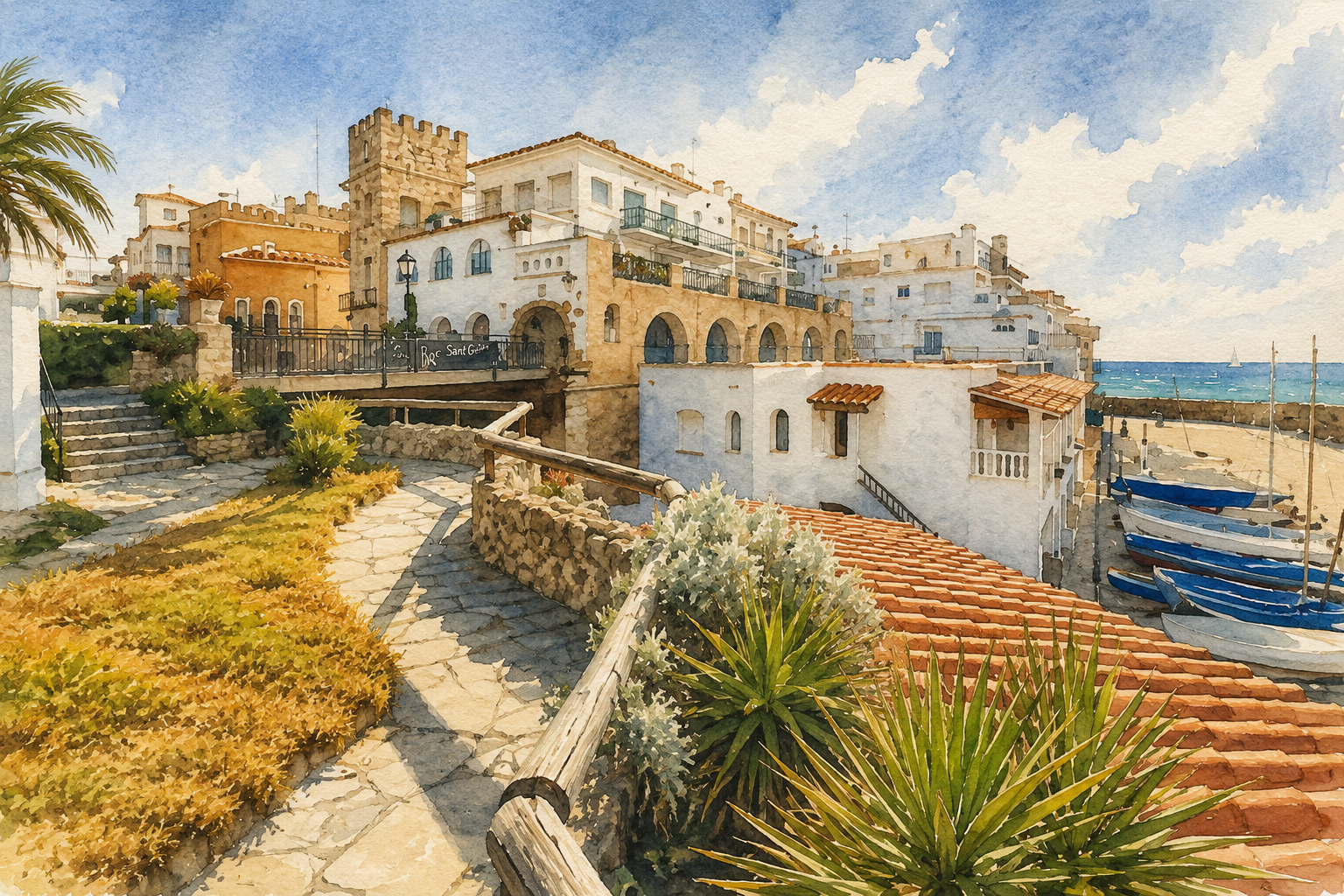
Further north, the coastline changes character once more. At Roc de Sant Gaietà, white houses, arches, stone and small terraces gather above the Mediterranean.
What makes this part of the coast especially enjoyable is the relationship between the village and the sea. The coastal path follows the rocky shoreline, opening views over small coves and the Mediterranean as it continues along the coast.
It is a very different landscape from Els Muntanyans, although only a short stretch of coastline separates them.
Follow the coast in the other direction and it changes again.
South of Tarragona, the broad beaches around Cambrils eventually meet a more rugged landscape. The mountains approach the Mediterranean, vegetation reaches the sand and rocky coves begin to break the shoreline.
Platja del Torn
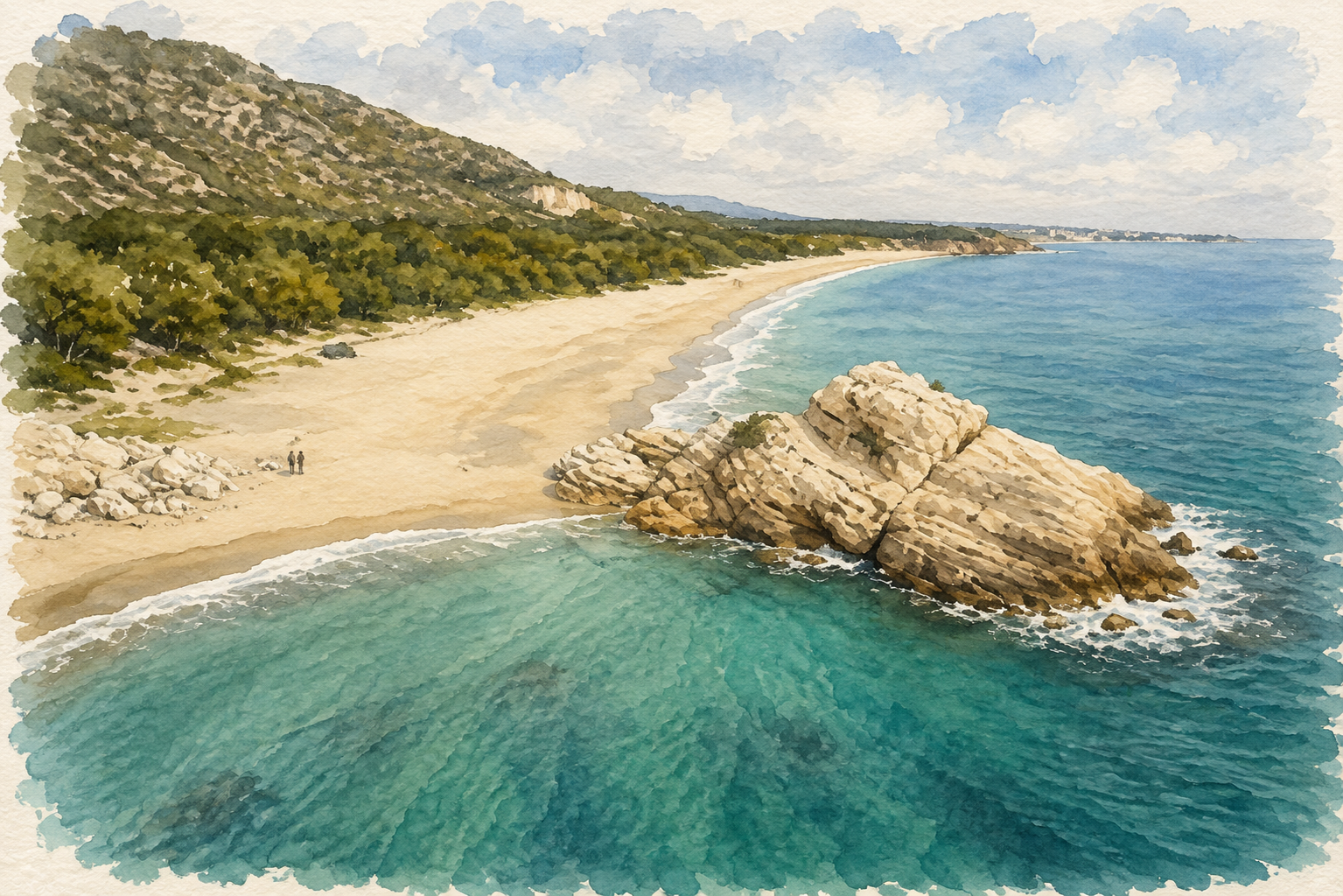
At Platja del Torn, the contrast becomes clear. The mountains sit close behind a long natural beach, with Mediterranean vegetation and rock defining the shoreline.
There is very little here to distract from the geography itself: mountain, forest, sand and sea.
L'Ametlla de Mar
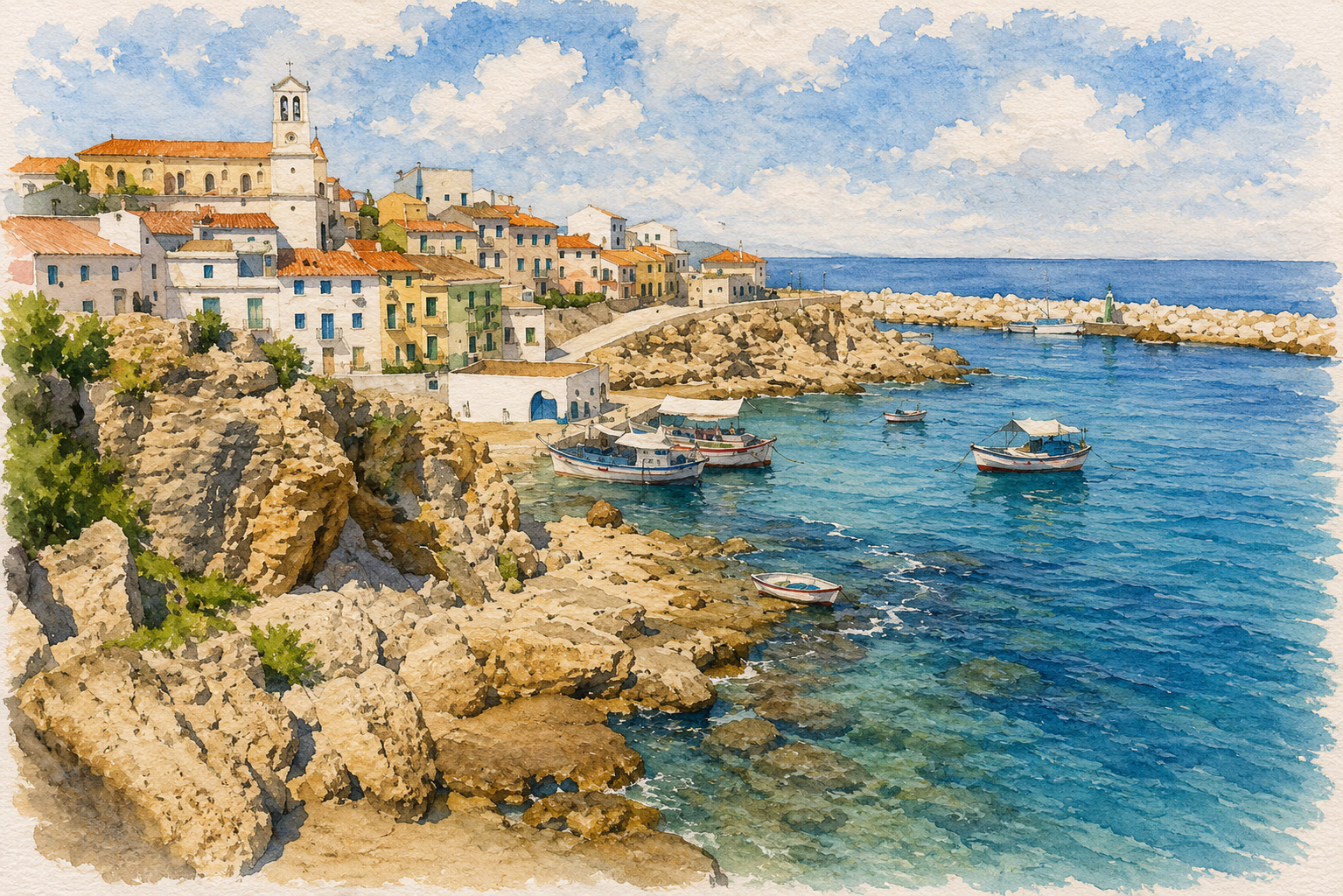
Around L'Ametlla de Mar the coast fragments into rocky headlands and small coves.
The village grew facing the Mediterranean, and its fishing harbour belongs to a tradition shared by many places along this coast — including Tarragona's own Serrallo.
Here the sea is not simply the view. For generations, it has been part of the way people worked, travelled and lived.
And then the land almost disappears.
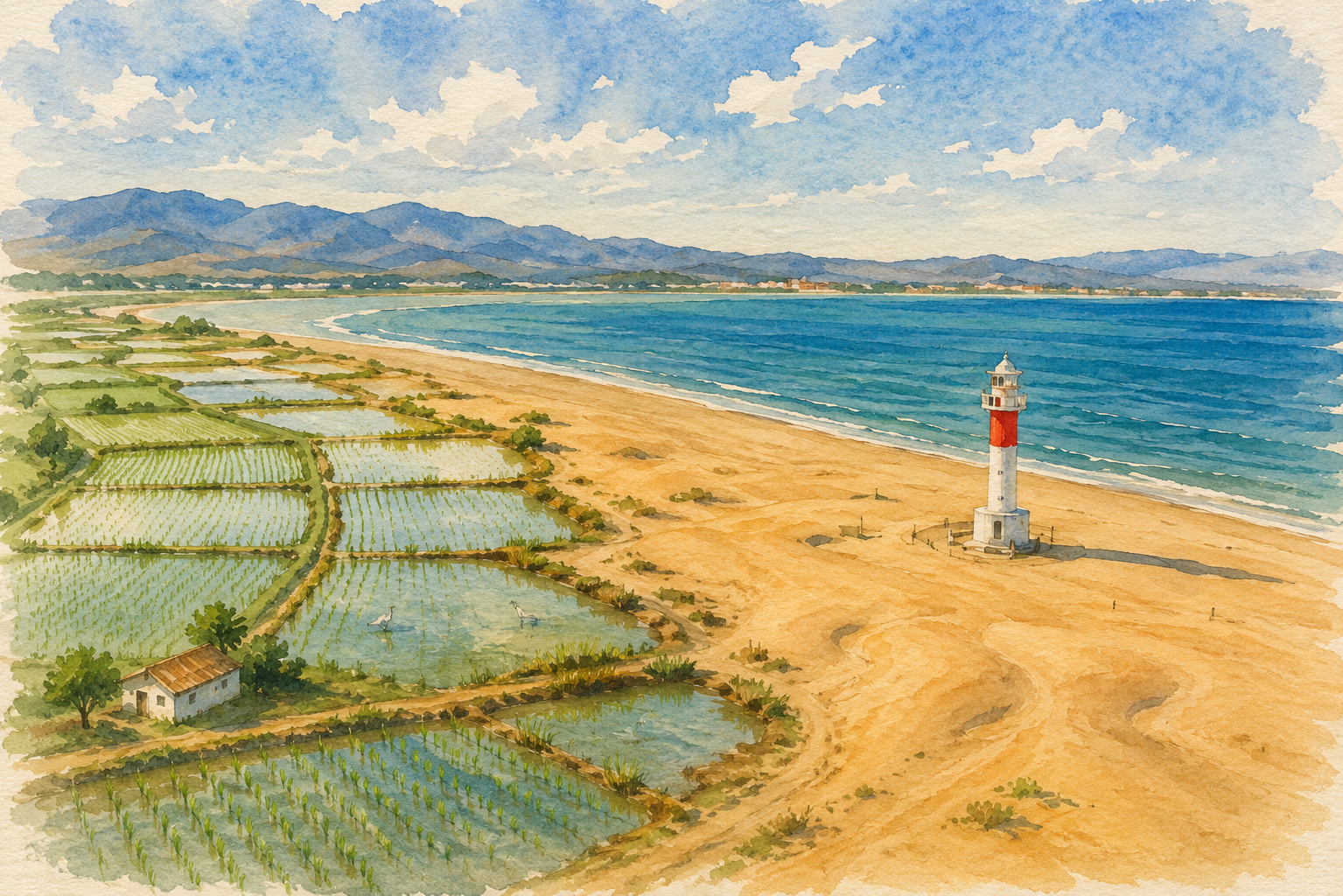
At the southern end of the Tarragona coast, everything changes.
Mountains and rocky coves give way to an immense, almost horizontal landscape of rice fields, lagoons, dunes, wetlands and sand.
The Ebro has shaped this landscape over centuries, carrying sediments from far inland and depositing them as the river reaches the Mediterranean.
It is one of the clearest examples in Tarragona of something that can be seen all across this territory: geography is never simply the background. It helps explain the place itself.