The Vineyards
of Tarragona
Leave the Mediterranean behind and Tarragona changes surprisingly quickly.
Vineyards, mountains, villages — and beneath them, soils that help explain why the wines can be so different.
A landscape shaped over centuries
Vines were growing in these lands long before the designations of origin we know today existed. Iberians and Romans were already making wine here centuries before the monasteries appeared in the landscape.
Later came communities such as the Cistercians of Poblet and Santes Creus. On the other side of the mountains, the Carthusians of Scala Dei settled in a very different landscape: steeper, drier and covered with the dark, fractured slate known as llicorella.
Each community had to work with the land it found. Over generations, people learned what could grow in each place, how to use water, which grape varieties adapted best and how to cultivate even the most difficult slopes.
That is what makes travelling through Tarragona's wine country so interesting today. The stone changes. The altitude changes. The wind, vegetation and way the vines are planted change. And, eventually, the wine changes too.
Six territories, six ways of understanding the land
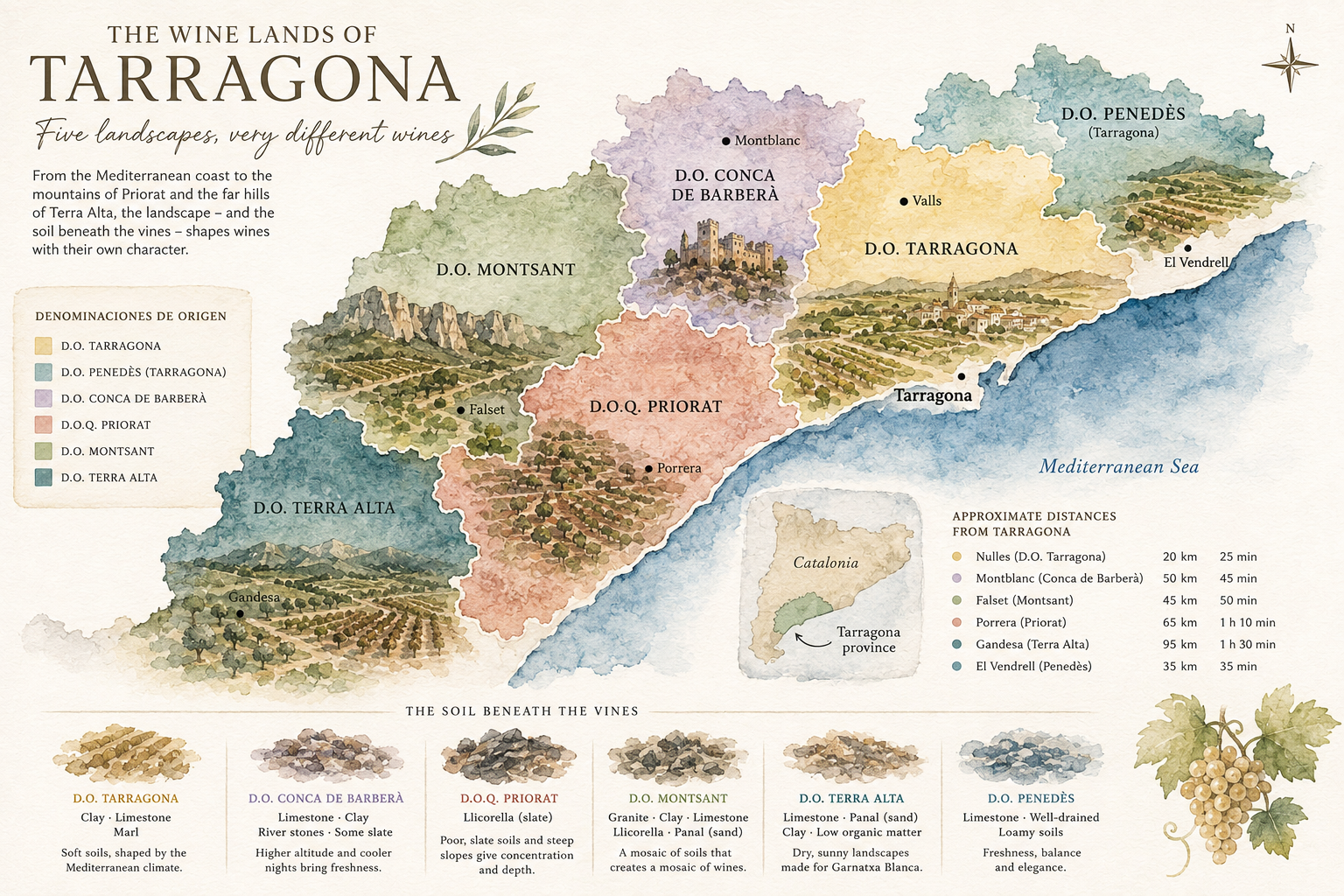
Each territory has its own character.From the Mediterranean coast to the mountains of Priorat and the drier lands of Terra Alta, each journey takes you into a different Tarragona.
DO Tarragona
Where the story of wine goes back a very long wayThe story of wine here began long before designations of origin. Iberians and Romans already cultivated vines, and the wine of Tarraco was part of Mediterranean life and trade for centuries.
That agricultural landscape is still recognisable today: vineyards, olive trees, small villages and old wine cooperatives all belong to the same long story of cultivation and adaptation.
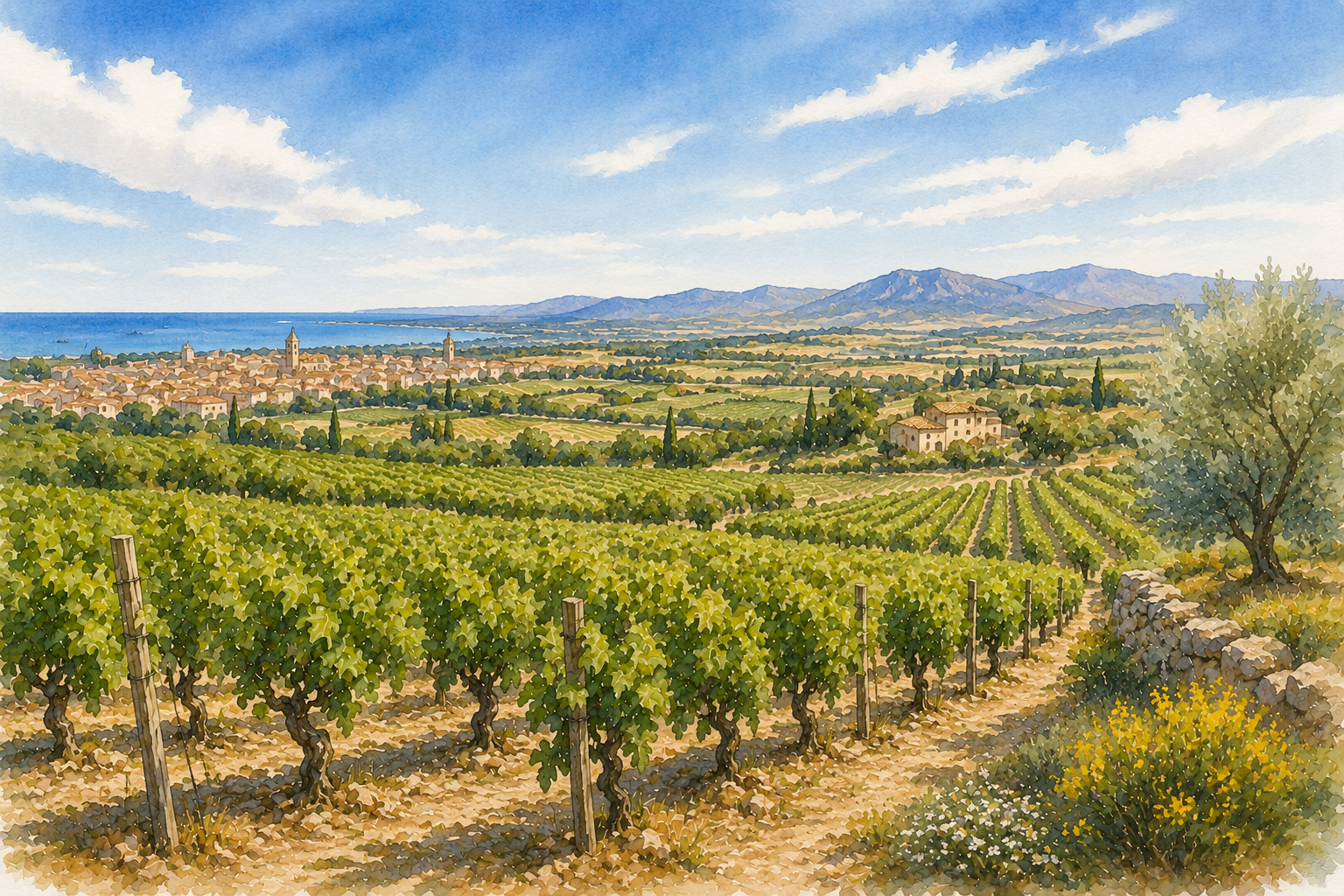
Mediterranean soils
From Roman Tárraco to the Alt Camp
A route through vineyards, villages and modernist wine architecture.
Explore the route ↗Conca de Barberà
Poblet, altitude and local varietiesIn the Conca de Barberà, both landscape and history change again. From the 12th century, the Cistercian monastery of Poblet administered an extensive agricultural territory.
Here the altitude rises, the nights are cooler and the mountains feel closer. Among the grape varieties that adapted particularly well is Trepat, today one of the defining features of the Conca.
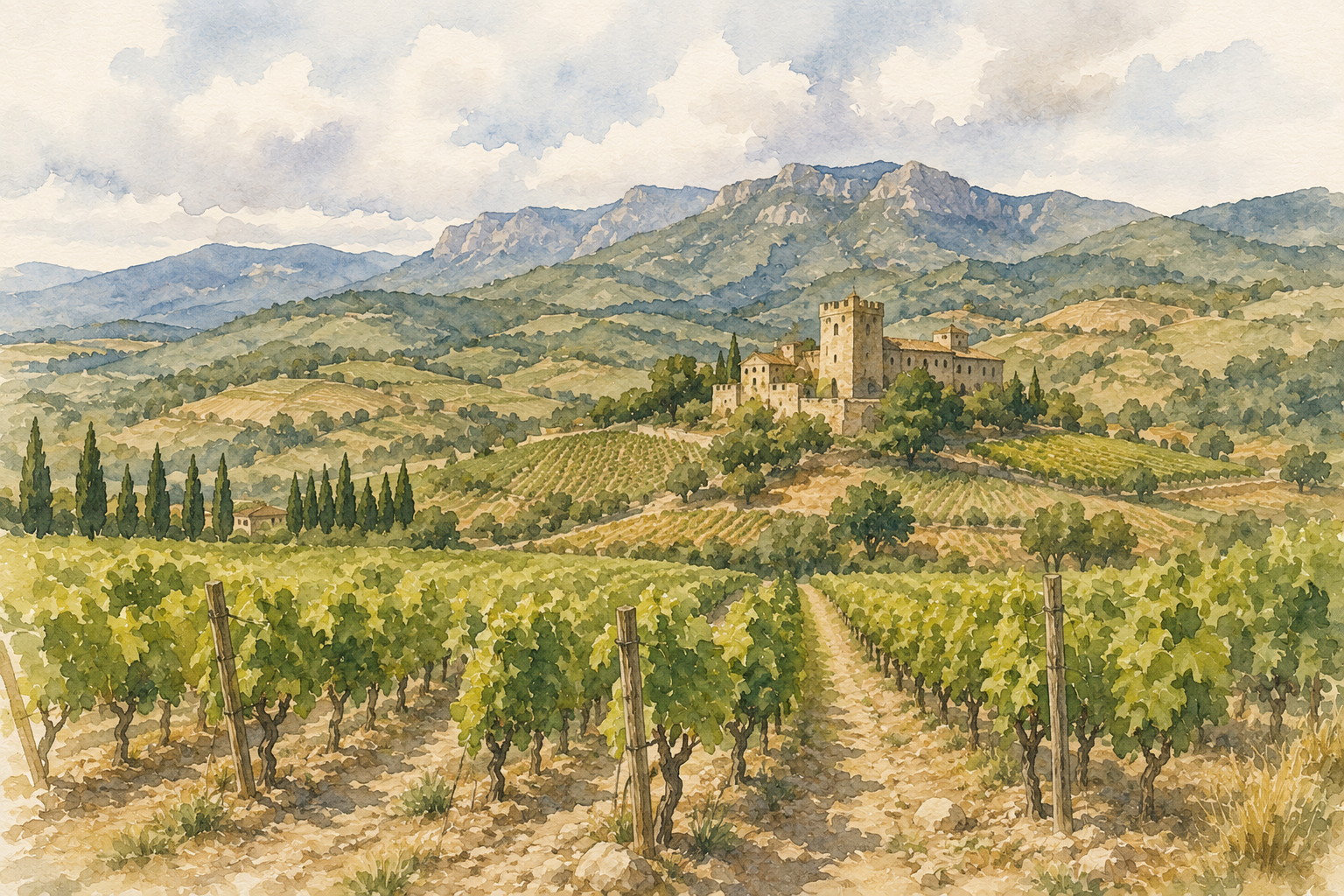
Cooler soils
Trepat & Conca de Barberà Wine Route
A way to explore the Conca through its vineyards, villages and Trepat.
Discover the Trepat Route ↗Priorat
Difficult land that eventually gave its name to a whole region.At the end of the 12th century, the Carthusians settled at Scala Dei. The territory administered by the prior of the charterhouse would eventually give its name to the whole region: Priorat.
Growing vines here has never been easy. The slopes are steep, water is scarce and beneath the vines lies llicorella. Garnacha and Cariñena learned to live with this demanding landscape.
That is why place matters here as much as grape variety: slate, slope, altitude and climate all become part of the wine's identity.
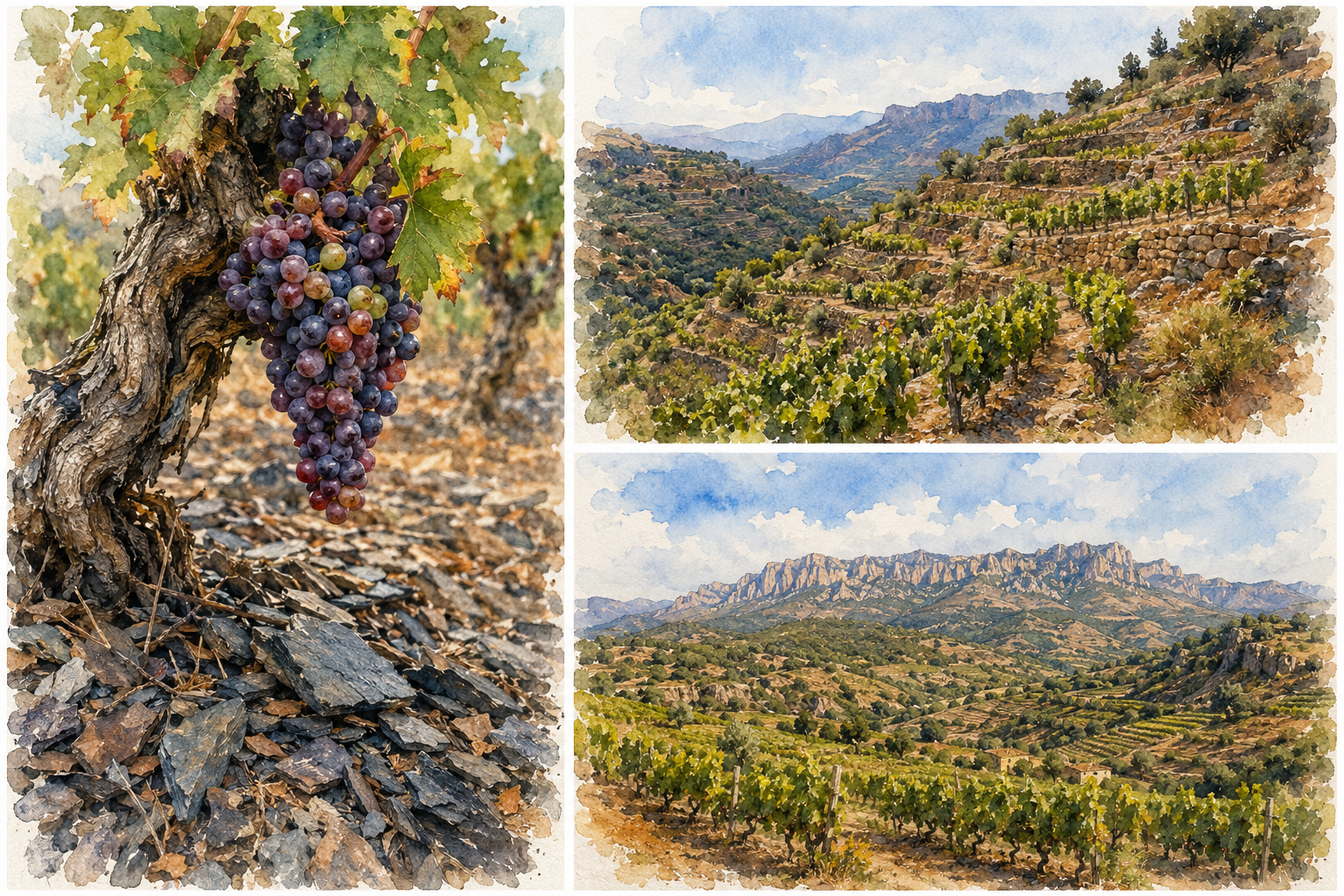
Llicorella
Slate. Dark, fractured stone covering the steep hillsides. Once you see it beneath the vines, you begin to understand why Priorat feels so different.
Priorat & Montsant Wine Route
Two designations in one county: wineries, villages, gastronomy and vineyard landscapes.
Discover the wine route ↗Montsant
Many soils, many expressionsDO Montsant surrounds much of historic Priorat, but its identity does not come from one single type of soil.
Clay, limestone, granite, panal and areas of llicorella all coexist here. The result is a territory best understood as a mosaic of small landscapes.
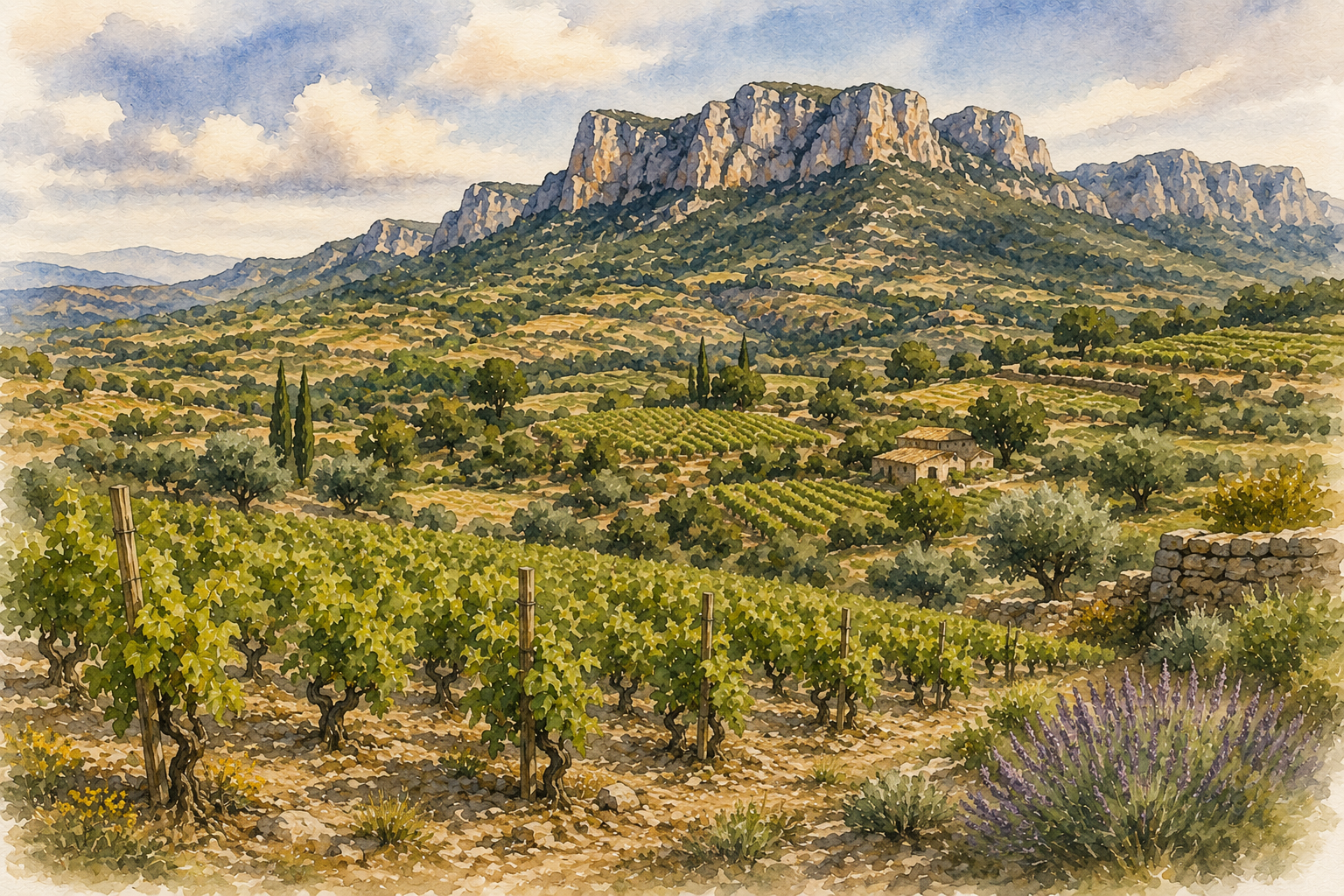
A mosaic of soils
Priorat & Montsant Wine Route
The same route also explores DO Montsant: wineries, villages, gastronomy and vineyards.
Discover the wine route ↗Terra Alta
A land where Garnatxa Blanca found its placeTerra Alta offers another way of understanding Mediterranean vineyards: high plateaus, dry climate, abundant light and traditional dry farming, where vines share the landscape with olive and almond trees.
Garnatxa Blanca found especially favourable conditions here and eventually became one of the great signatures of the region.
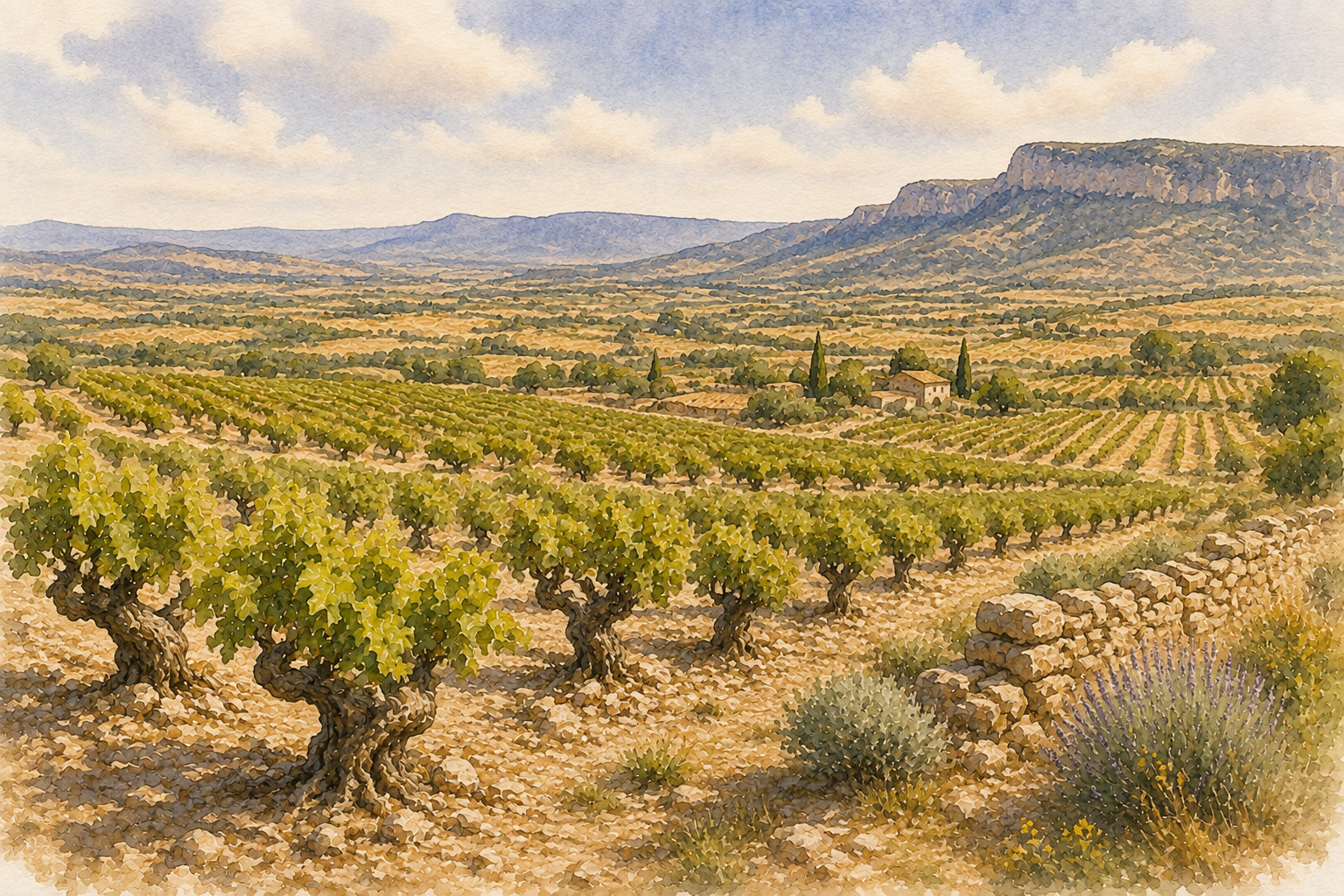
Mediterranean dry land
Terra Alta Wine Route
Garnatxa Blanca, vineyards, wineries and inland Mediterranean landscapes.
Explore the route ↗Penedès
A wine territory that continues beyond TarragonaPenedès extends mainly beyond the province, but its southern territory also reaches into Tarragona.
It is a useful reminder that agricultural history and wine geography rarely follow administrative borders exactly.
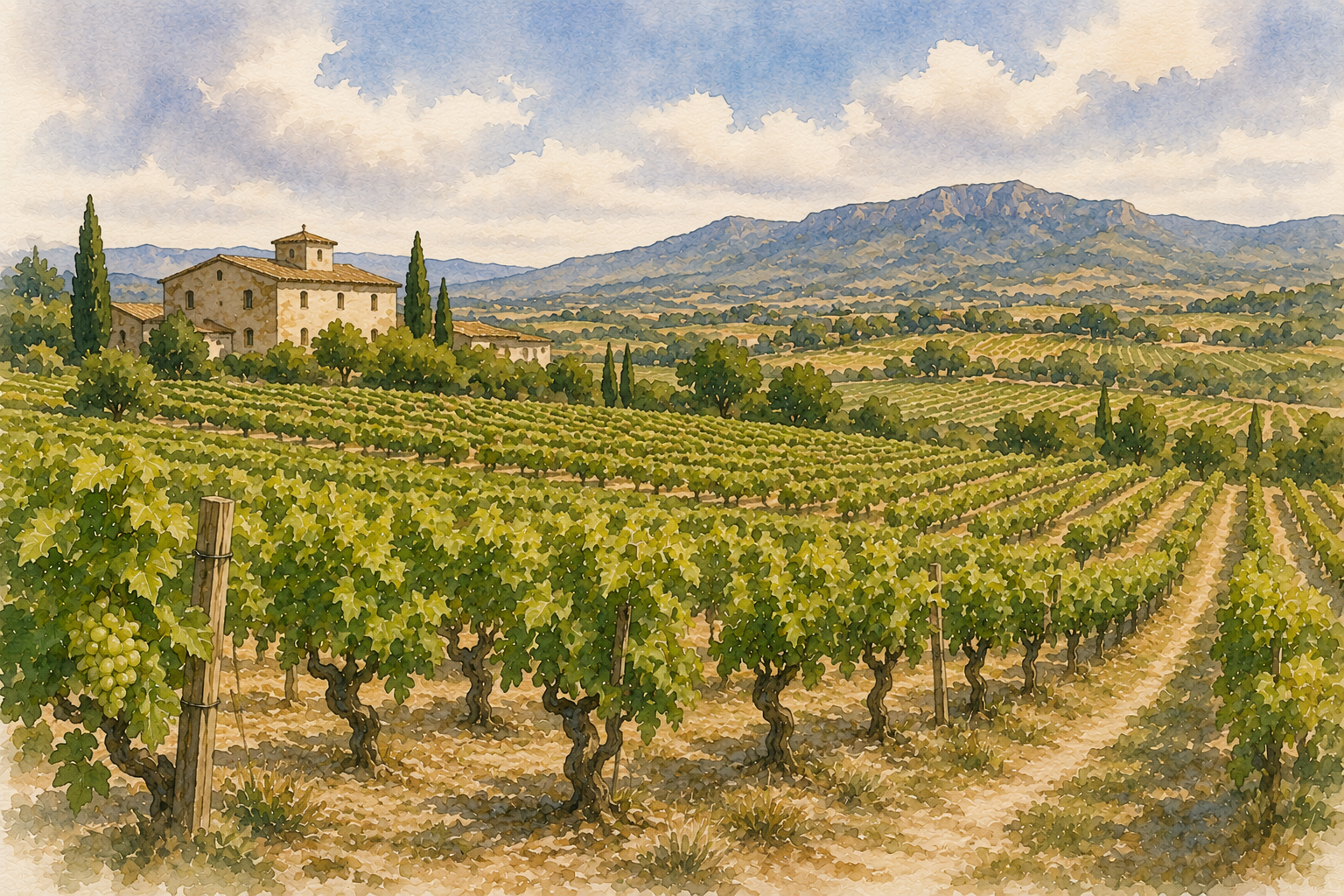
Well-drained soils
Penedès Wine Route
Wineries, vineyard experiences, gastronomy and rural landscapes.
Explore the route ↗