
The Romans arrived here during the Second Punic War and gradually transformed the settlement into a monumental city. Tarraco grew from the Mediterranean upwards, using the natural slope of the hill to organise power, public life and spectacle.
Tarragona Through Time
Sleep among
Sleep among
2,000 years
of history
From Roman Tarraco to the medieval city and the dramatic siege of 1811, discover the layers of history hidden among Tarragona’s streets.
01 · Roman Tarraco
The Roman city beneath Tarragona
Tarragona did not become important by accident. Its position above the Mediterranean, beside a natural harbour and close to the great routes of the Iberian Peninsula, made Tarraco one of Rome’s key cities in Hispania.
At the highest point stood the great provincial complex, with the sacred precinct above the forum and circus. Below it, the city descended towards the port and the sea.
When Augustus spent time in Tarraco, the city became for a brief period one of the places from which the Roman world itself was governed.
Walk through the Part Alta today and the Roman city is still present in walls, foundations, reused stone and even in the shape of streets built centuries later.
You are staying here
Inside the monumental centre of ancient Tarraco
Catedral Charming House sits in the Part Alta, the upper city where Roman Tarraco concentrated some of its most important monumental spaces. The city around the apartment has changed, but its Roman geography is still remarkably present.
02 · Medieval Tarragona
A new city grew inside the Roman one
Medieval Tarragona did not erase Tarraco. It occupied it, reused it and slowly transformed its monumental spaces into streets, houses, workshops and places of worship.
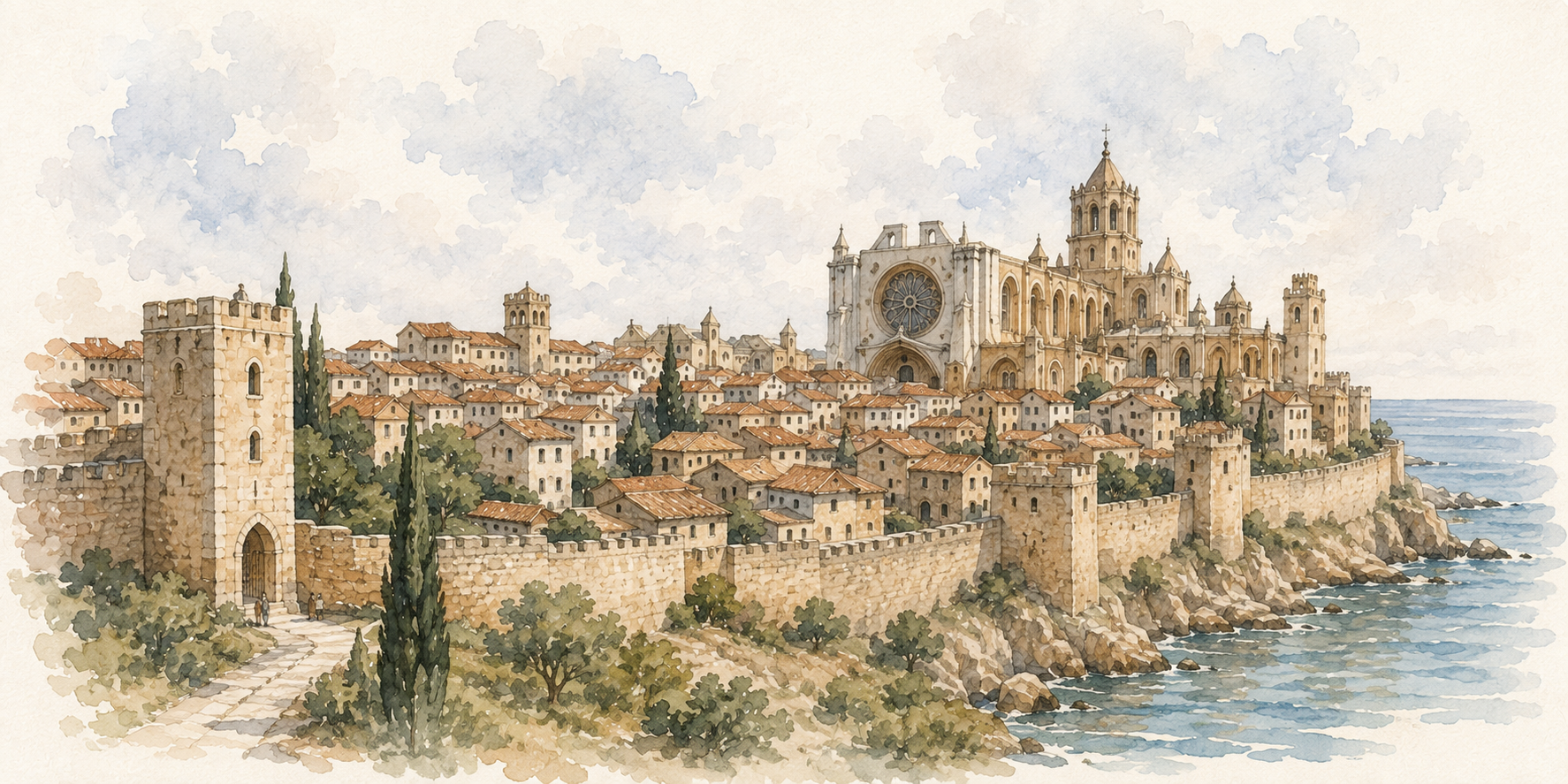
After centuries of decline and instability, Tarragona began to take shape again as a medieval city. The easiest place to rebuild was the defensible upper hill, protected by the great structures that Rome had left behind.
Roman walls became medieval walls. Ancient masonry was absorbed into houses and streets. Spaces once designed for imperial ceremony acquired completely different lives.
The clearest expression of that transformation is the Cathedral. It rises at the highest point of the Part Alta, close to the place once occupied by the Roman sacred precinct.
This is why walking through the old city can be deceptive: what appears medieval at street level often stands directly on top of something much older.
You are staying here
Among the streets of the medieval city
Around Catedral Charming House, narrow streets still follow the compact scale of the Part Alta. The Cathedral, old walls and medieval lanes are not a separate historic district: they form the neighbourhood itself.
03 · Tarragona, 1811
The city that survived a siege
In 1811 Tarragona’s walls once again determined the fate of the city. During the Peninsular War, the fortified city became the scene of one of the conflict’s most devastating sieges.
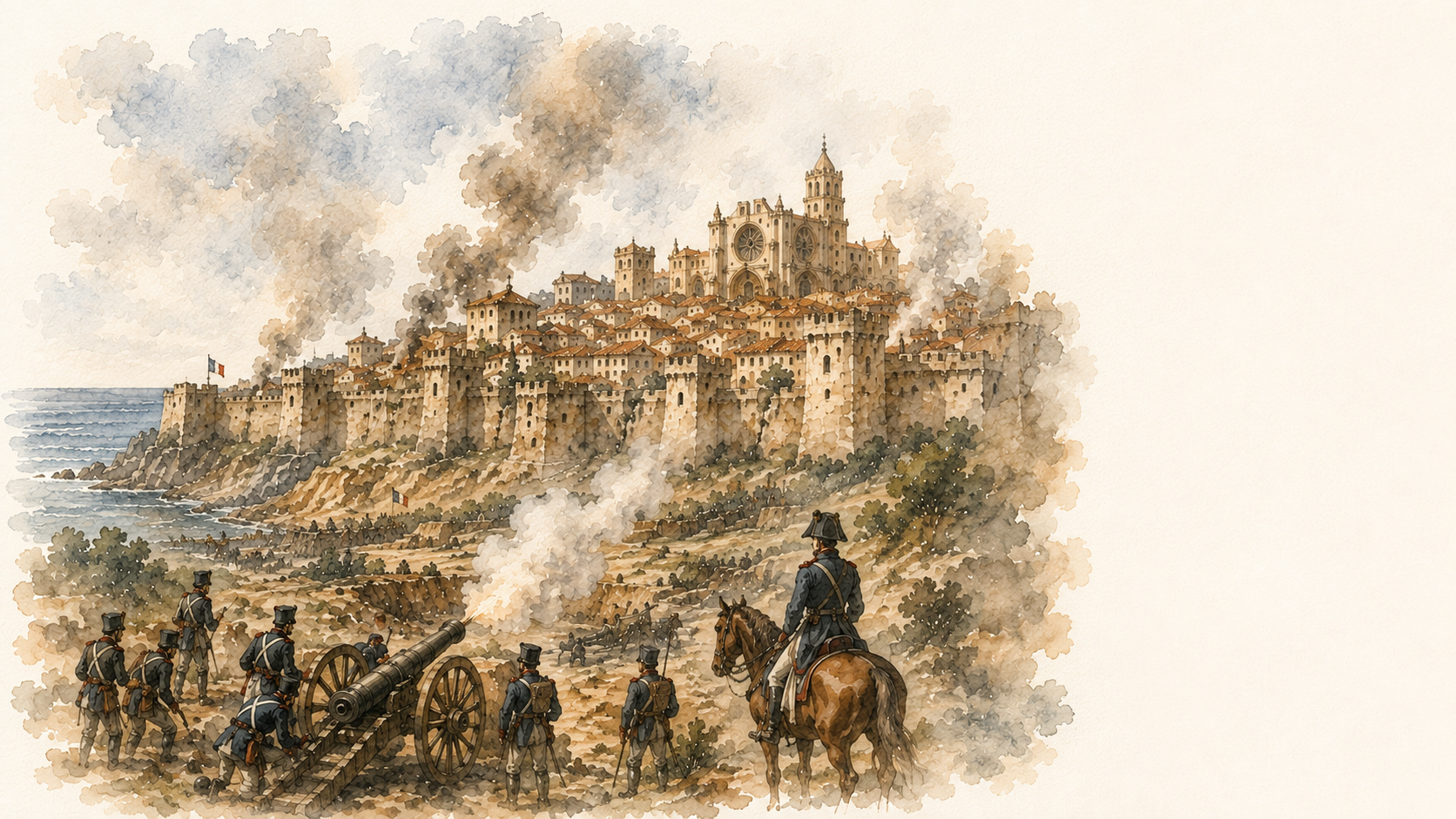
French forces under General Suchet surrounded Tarragona in May 1811. For 56 days the city was progressively isolated while artillery opened breaches through its defensive system.
The struggle moved closer and closer to the upper city. Fortifications that had protected Tarragona for centuries became the final barriers between the attacking army and the population inside.
On 28 June the last defences were overwhelmed. Fighting entered the Part Alta and the capture of Tarragona was followed by extraordinary destruction and loss of life.
The siege left a profound mark on the city. Tarragona recovered, but 1811 became another historical layer added to the Roman walls and medieval streets that had already shaped it.
You are staying here
Inside the last defended city
The Part Alta was at the heart of the final stage of the siege. Streets that today feel quiet and domestic formed part of the confined upper city where the last defence of Tarragona unfolded.
History is not only something you visit in Tarragona.
It surrounds the place where you stay.
Roman foundations, medieval streets and the traces of 1811 coexist within a surprisingly small part of the city. In Tarragona, two thousand years of history are often only a few steps apart.
Stay in historic Tarragona →