Monastery · Mountains · Royal pantheon
Poblet
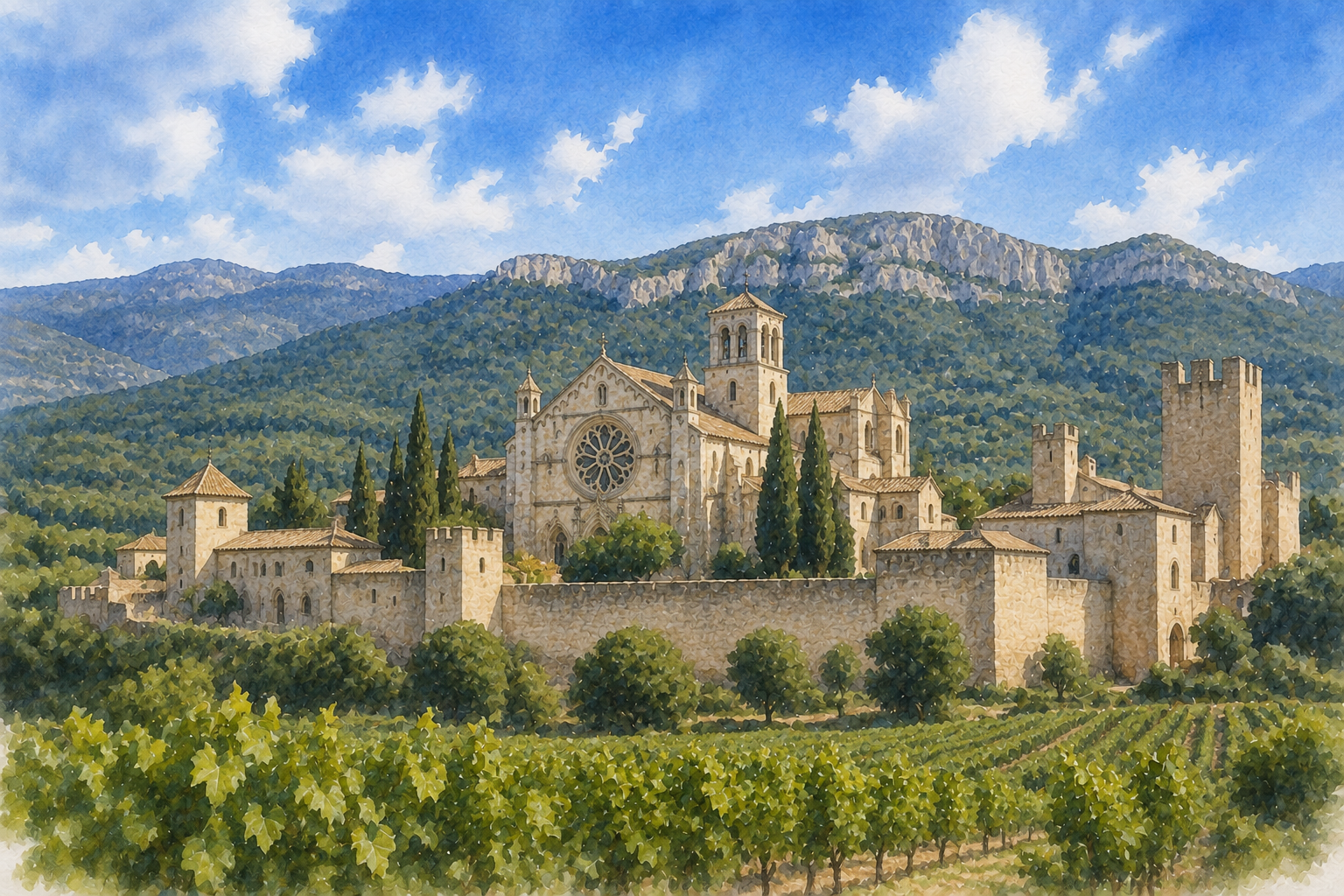
Beneath the Prades mountains, a Cistercian foundation grew into one of the great royal monasteries of the Crown of Aragon.
Story coming soonLeave the Mediterranean behind for a while and follow the story inland: royal towns, Cistercian monasteries, rivers, vineyards and mountains.
For generations, the lands inland from Tarragona had been exposed to conflict, political uncertainty and fragile control. Roads were less secure, population was scattered and holding the territory was as important as conquering it.
Winning land was one thing. Keeping it was another.
The new rulers needed permanent settlements, safer routes, cultivated fields and communities that intended to stay. The frontier had to become a lived, organised and defensible landscape.
A royal town brought families, craftsmen, markets, privileges and control of the road inland. Its walls were not built to make Montblanc picturesque: they were part of the effort to make the territory stable and permanent.
Land was granted to Cistercian abbeys so that new communities could take root, organise estates, manage water, cultivate the countryside and create a lasting religious and economic presence.
To understand why monks arrived from north of the Pyrenees, forget the map of modern Europe for a moment. The Catalan counties and Occitania were closely connected by noble families, politics, trade and religion, while Cistercian abbeys formed networks that crossed those lands.
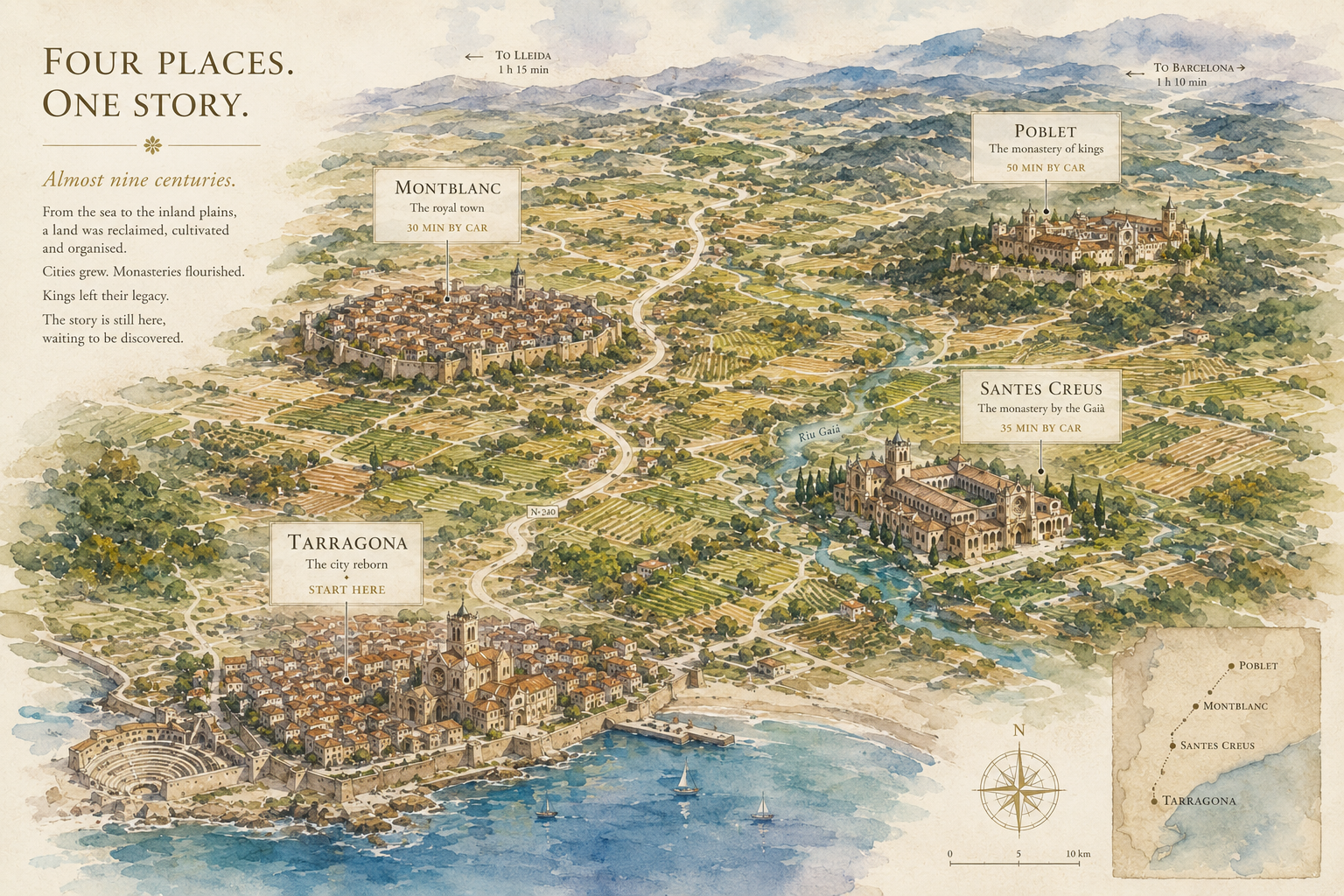
In just a few years, military expansion, new towns and monastic foundations appear side by side in the same landscape. The four places below tell different parts of that transformation.
They belong to the same medieval world, but each place tells it differently.
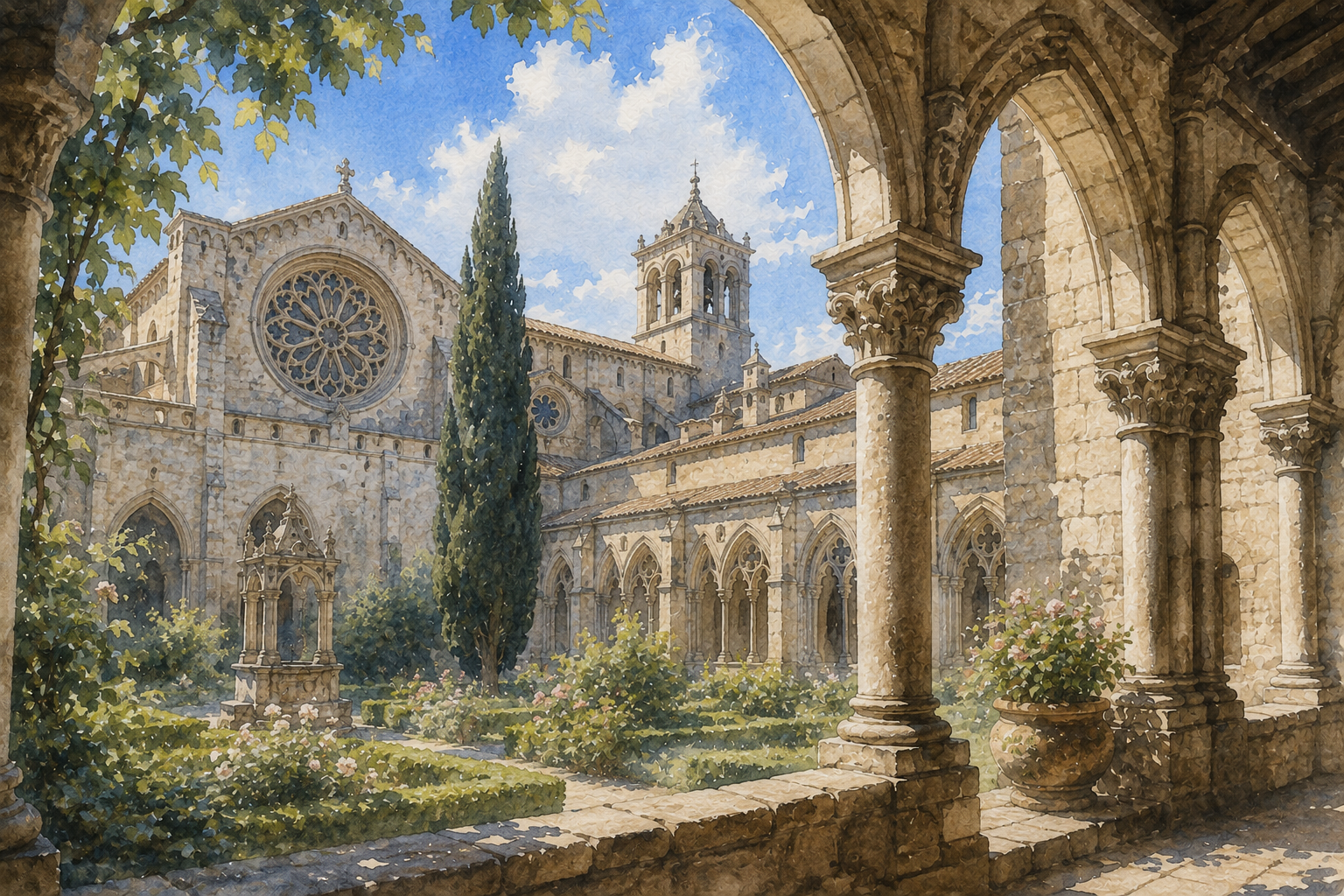
A community searched for the right place until water led it to the Gaià. Centuries later, kings chose to remain here.
Discover Santes Creus →
Beneath the Prades mountains, a Cistercian foundation grew into one of the great royal monasteries of the Crown of Aragon.
Story coming soon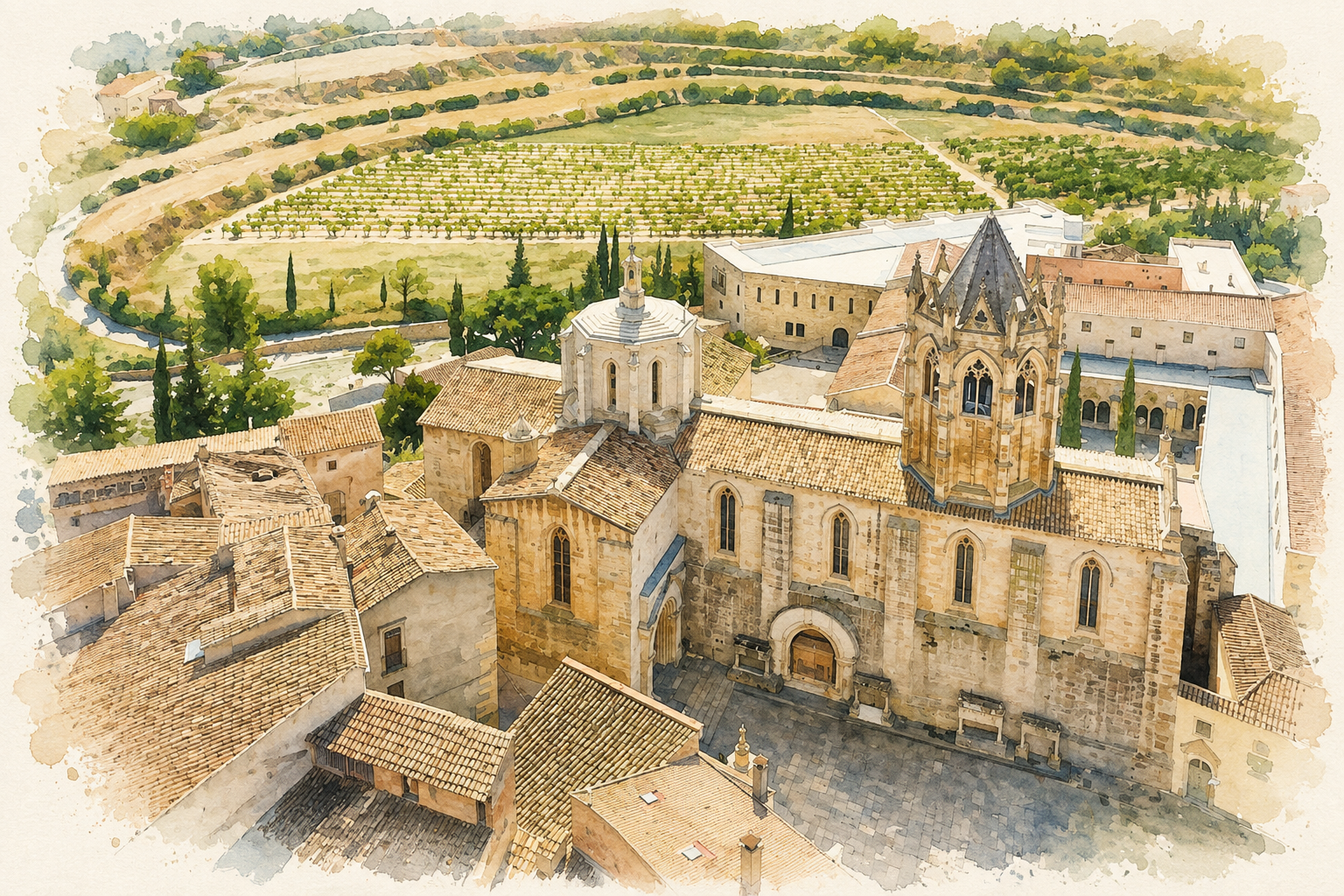
The third great Cistercian house of the route tells a different story: a female community whose monastic life has continued across the centuries.
Story coming soon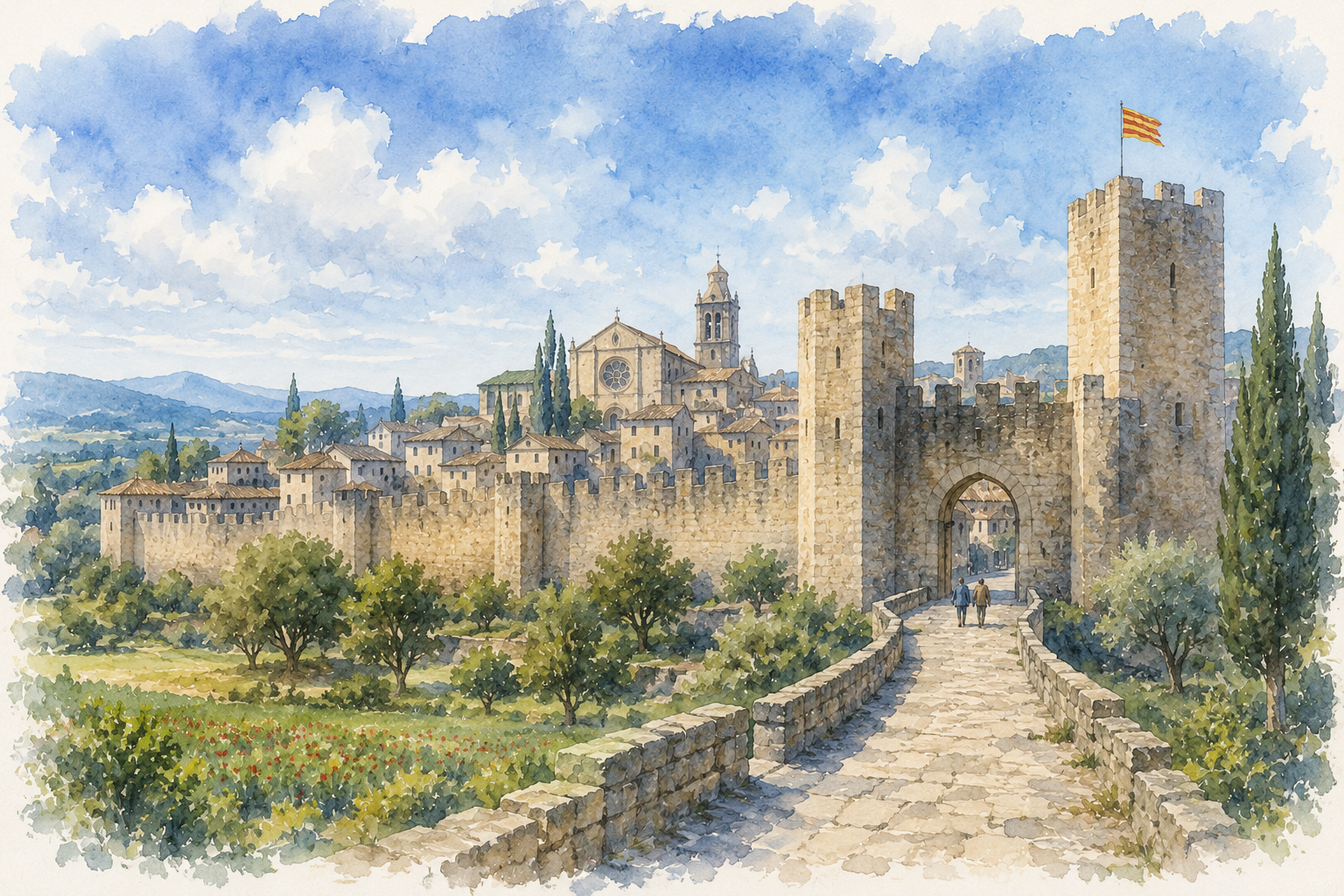
Not a monastery, but another part of the same transformation: a royal town where walls, trade and urban life secured the interior.
Story coming soonRivers, stone, farmland, vineyards, walls and mountains still connect these places. Once you know the story, the landscape itself begins to make sense.
From Tarragona, this medieval country is best discovered slowly — one place, and one story, at a time.