
Santes Creus
Where the River Changed the Story
A community searching for a home, a river that made it possible, and a quiet monastery that would one day become a resting place for kings.
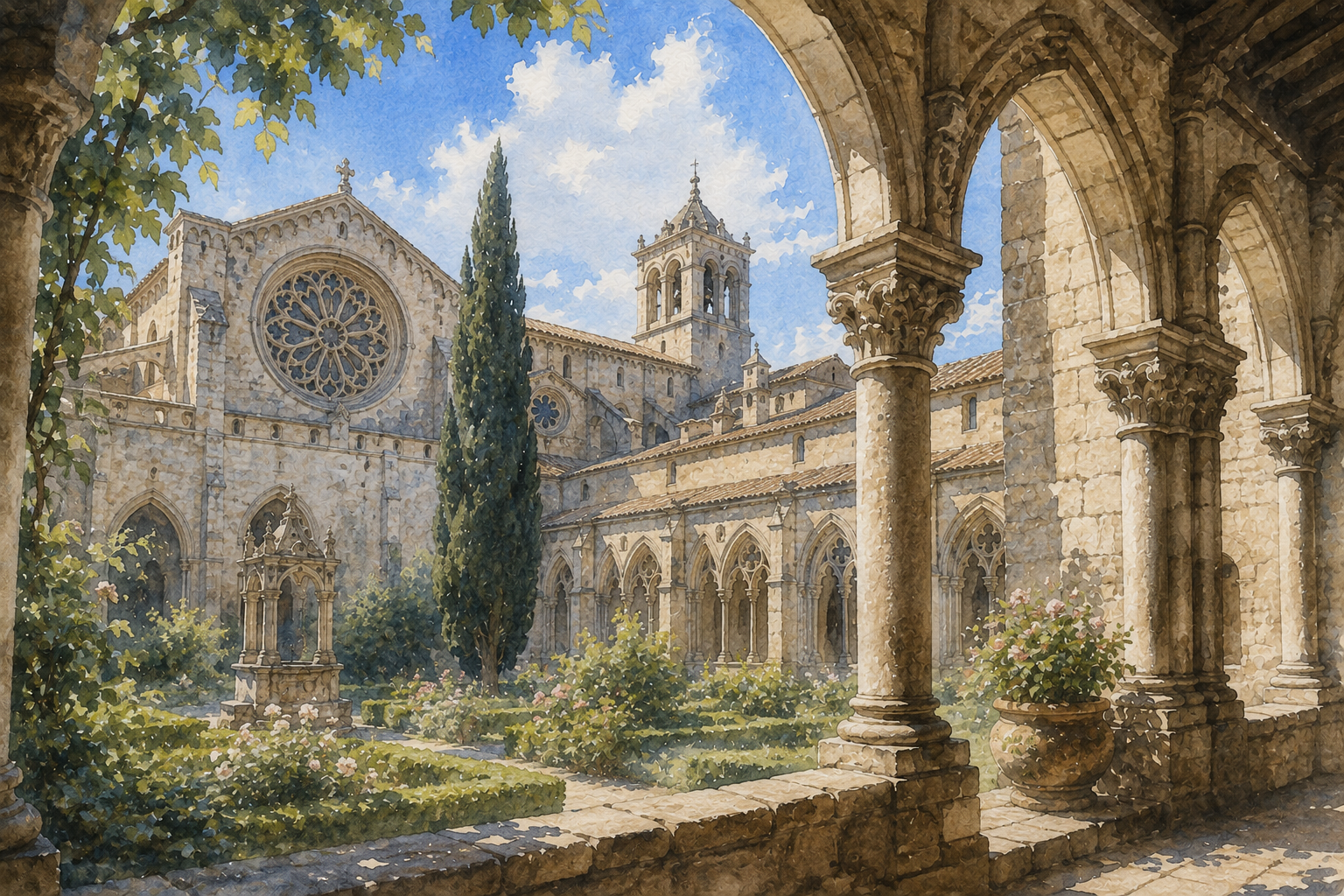
The story begins before Santes Creus existed.
The nobleman Guillem Ramon de Montcada made a gift of land at Cerdanyola del Vallès to the Cistercian abbey of Grandselve, in the world north of the Pyrenees.
The purpose was clear: a group of Cistercian monks was to establish a new monastery on those lands.
To us, monks arriving from what is now France can sound like a journey between two different countries. In the 12th century, the map worked differently. The Catalan counties and Occitania were closely connected through noble families, politics and religion, while Cistercian abbeys themselves formed a network that crossed the mountains.
The monks had been given a mission.
What they had not yet found was the right place.
Their first home would not be their last.
The first foundation became the monastery of Valldaura. But as the community grew, the monks began looking for land better suited to the needs of a Cistercian abbey.
Count Ramon Berenguer IV helped them obtain another site at Ancosa, in the Anoia region.
It still was not right.
Ancosa lacked something a monastery could not live without: water.
Water meant far more than drinking. A monastic community needed it for cooking, washing, latrines, gardens, cultivated land and mills.
The landscape was not simply the setting for a monastery. It determined whether the community could survive there.
So the monks moved on once again.
Then they reached the Gaià.
Guerau Alamany de Cervelló and Guillem de Montagut offered the community lands on the left bank of the River Gaià.
This time, the search ended.
Here there was water. There was land that could be cultivated. There were resources for a community that intended not merely to visit, but to remain.
Here Santes Creus began.
Over time, water was channelled through the monastery to serve everyday life: the kitchen, lavatorium and latrines, the cultivated land and the mills. What looks today like a peaceful river landscape was once part of the machinery that kept the monastery alive.
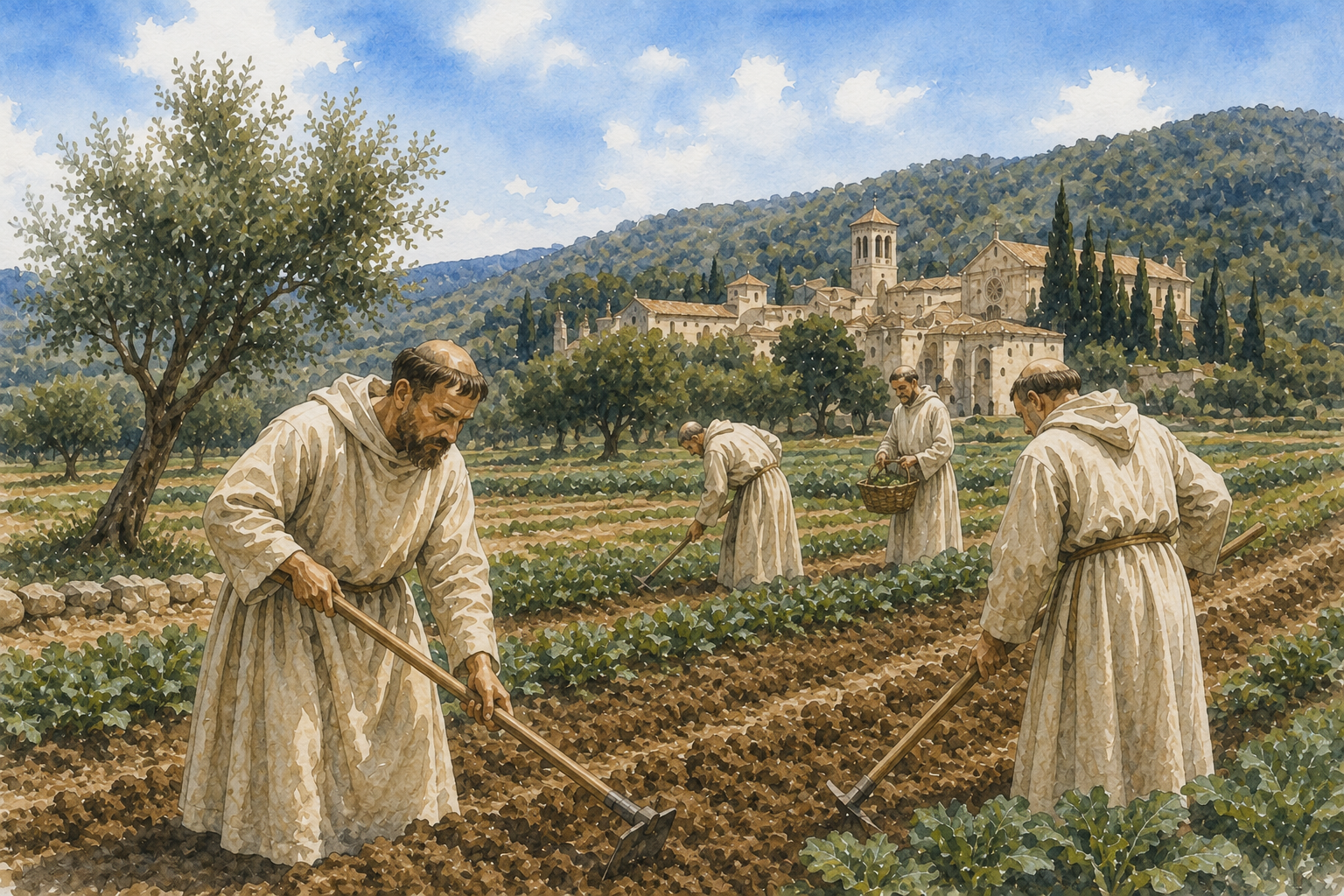
The monastery was much more than the building we see today.
Around the church and cloister grew an organised working landscape: fields, gardens, mills, workshops and dependent farms.
The monks did not carry out all of this work alone. Alongside the choir monks lived the conversi, or lay brothers, members of the religious community whose lives were much more closely connected with practical work and the management of the estates.
Slowly, the community that had spent years searching for a home became rooted in the valley.
The land offered to the monks was already known as Santes Creus — “Holy Crosses”.
A local legend tells of mysterious lights seen at night over the grazing land. Shepherds are said to have marked the places where the lights appeared with wooden crosses.
It is a legend, not a documented explanation. But it has remained attached to the place for centuries.
The quiet monastery beside the Gaià began to attract kings.
During the 13th and 14th centuries, Santes Creus entered its great period of splendour. Royal and noble patronage brought influence, prestige and a new architectural richness.
The contrast can still be felt when you visit. The solid austerity associated with the Cistercian ideal gives way, in places, to the refinement of Gothic art.
And nowhere is that transformation more powerful than inside the church.
The kings are still here.
Beside the high altar stand two extraordinary Gothic funerary monuments. They are not memorials to absent rulers.
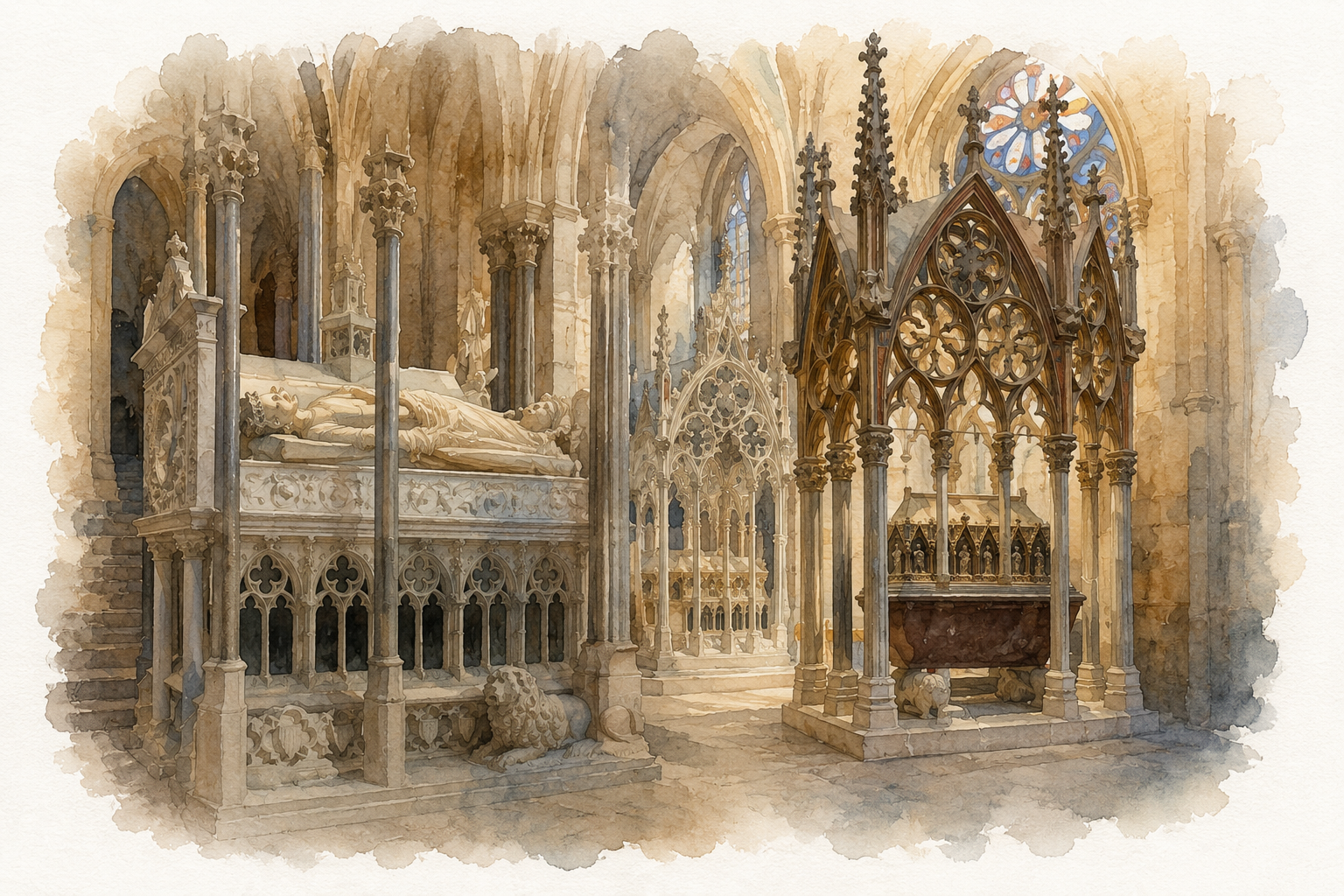
Pere III of Aragon — Pere the Great — chose Santes Creus as his burial place. Jaume II the Just and Queen Blanche of Anjou would also be buried here. All three became closely connected with the monastery as patrons and protectors.
Their remains still rest in the church, in two Gothic mausoleums beside the high altar.
had led to a monastery chosen by kings.
Once you know who lies here, the church feels different. These are people who shaped the medieval Mediterranean — and they never left Santes Creus.
Go back to where the story began.
After the cloister, the church and the royal tombs, do not get straight back into the car.
Walk towards the Gaià.
More than eight centuries ago, a community that had already tried two other places came here because this landscape gave them what they needed to stay.
The river they were searching for
is still flowing beside the monastery.
Santes Creus is beautiful even if you know nothing about its history. But once you know why the monks arrived, why they kept searching, and why the river mattered, the whole place begins to look different.
Stay a little longer than you planned.